Engineered Hardwood Installation Methods
The same plank can be fastened three ways. Which one you get depends on what's underneath.
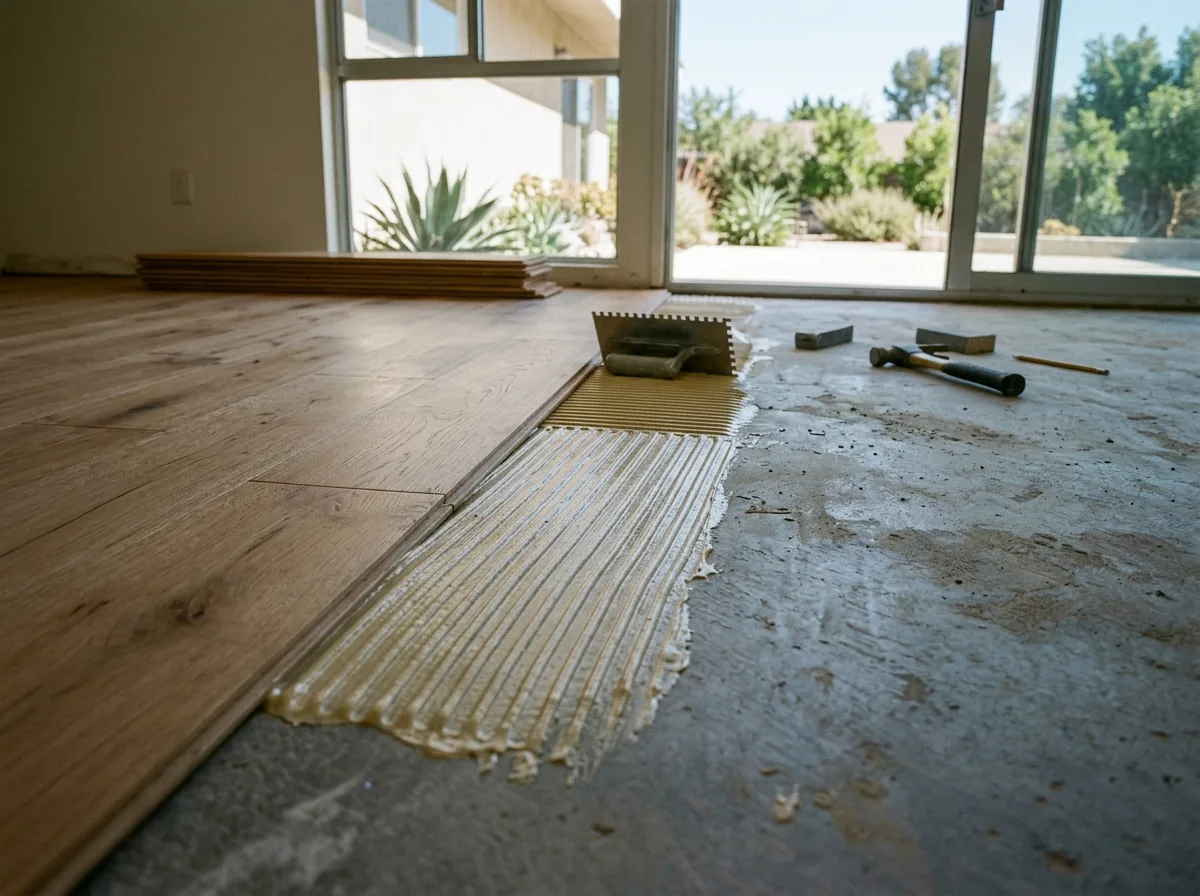
Glue-Down Engineered on Concrete
Gluing is the usual way to put wood on a slab. HomeGuide prices glue-down labor higher than nailing, since slab prep, adhesive and moisture-proofing all add time.
- Labor: high end of the $3 to $8+ a square foot engineered range
- The slab has to pass a moisture test first; the method and limits are on Hardwood Floors Over Concrete
- Flatness matters more than with nailing: NWFA wants a glue-down base within 3/16 inch over 10 feet
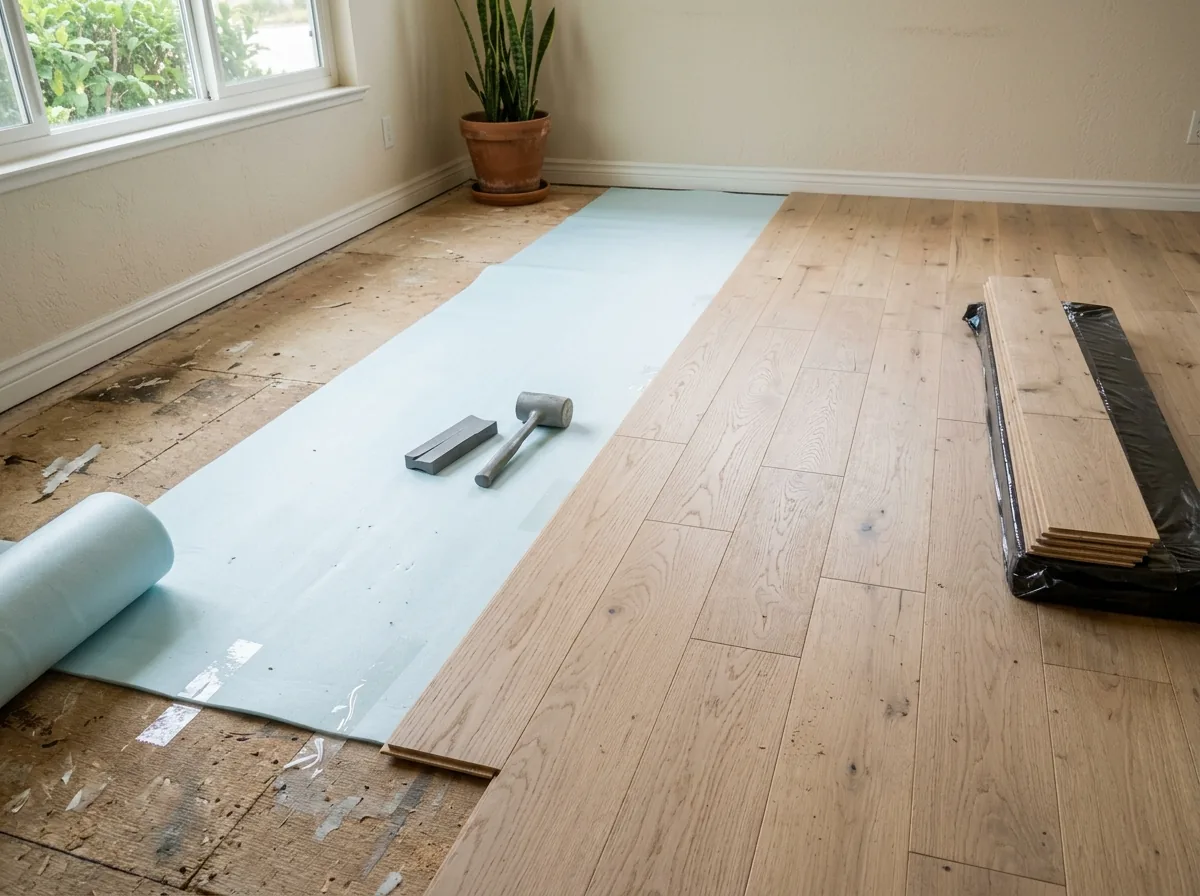
Floating Click-Lock Engineered
Floating planks lock to each other edge to edge and rest on an underlayment, with no nails and no glue into the floor. HomeGuide calls it the most affordable installation, and the underlayment adds moisture protection, sound dampening and cushioning.
- Fixr: floating $7 to $12 a square foot installed, click-lock $10 to $14
- Underlayment: $0.50 to $1.00 per square foot
- A floating floor needs a level subfloor, so dips get filled first
In a condo, the underlayment also has to meet the building's sound rules; see Condo Hardwood Flooring.
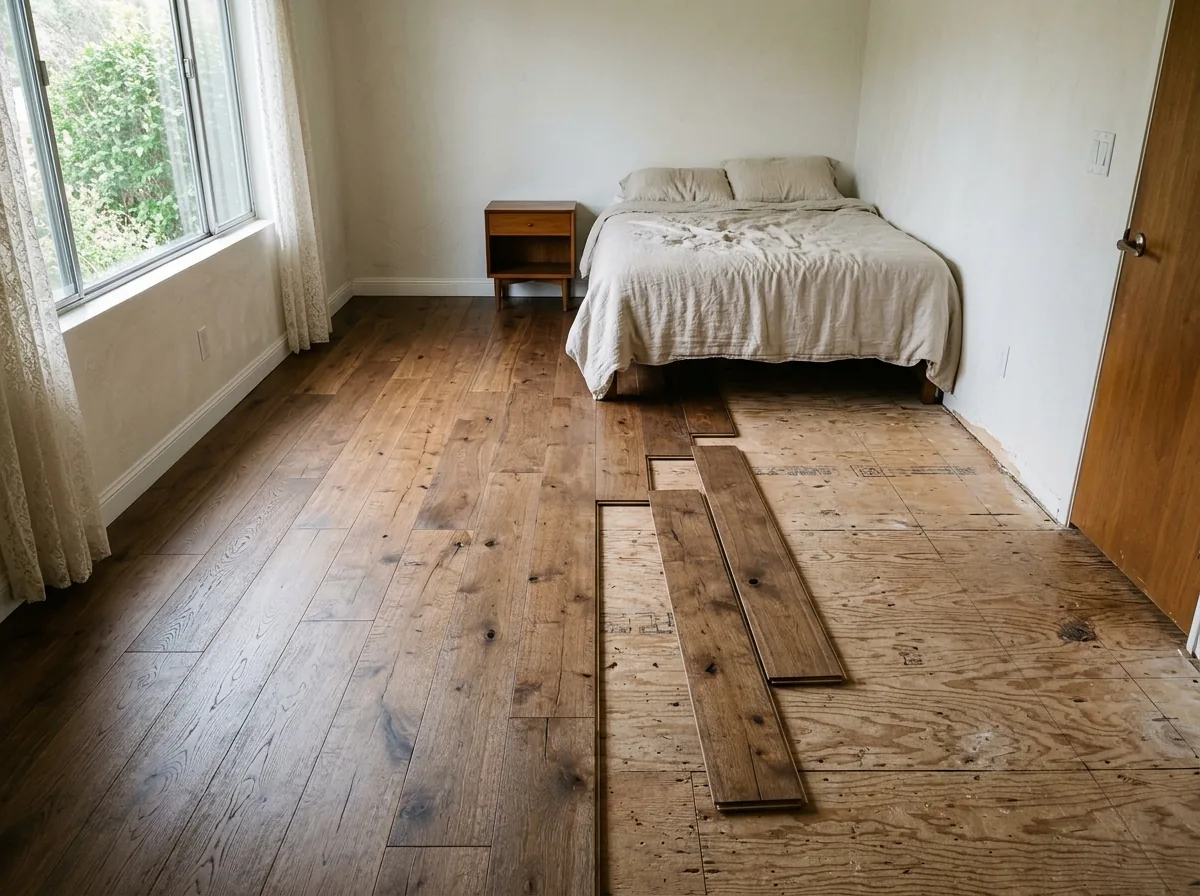
Nail- or Staple-Down Engineered Over Plywood
On a raised wood subfloor, engineered planks can be stapled or cleat-nailed like solid. HomeGuide puts this at the lower end of the labor range. It's a good fit where an older wood floor came out and the plywood is sound. Moisture readings and acclimation follow the same NWFA checks as solid; see Hardwood Floor Installation.
Wear Layer and Core Choices
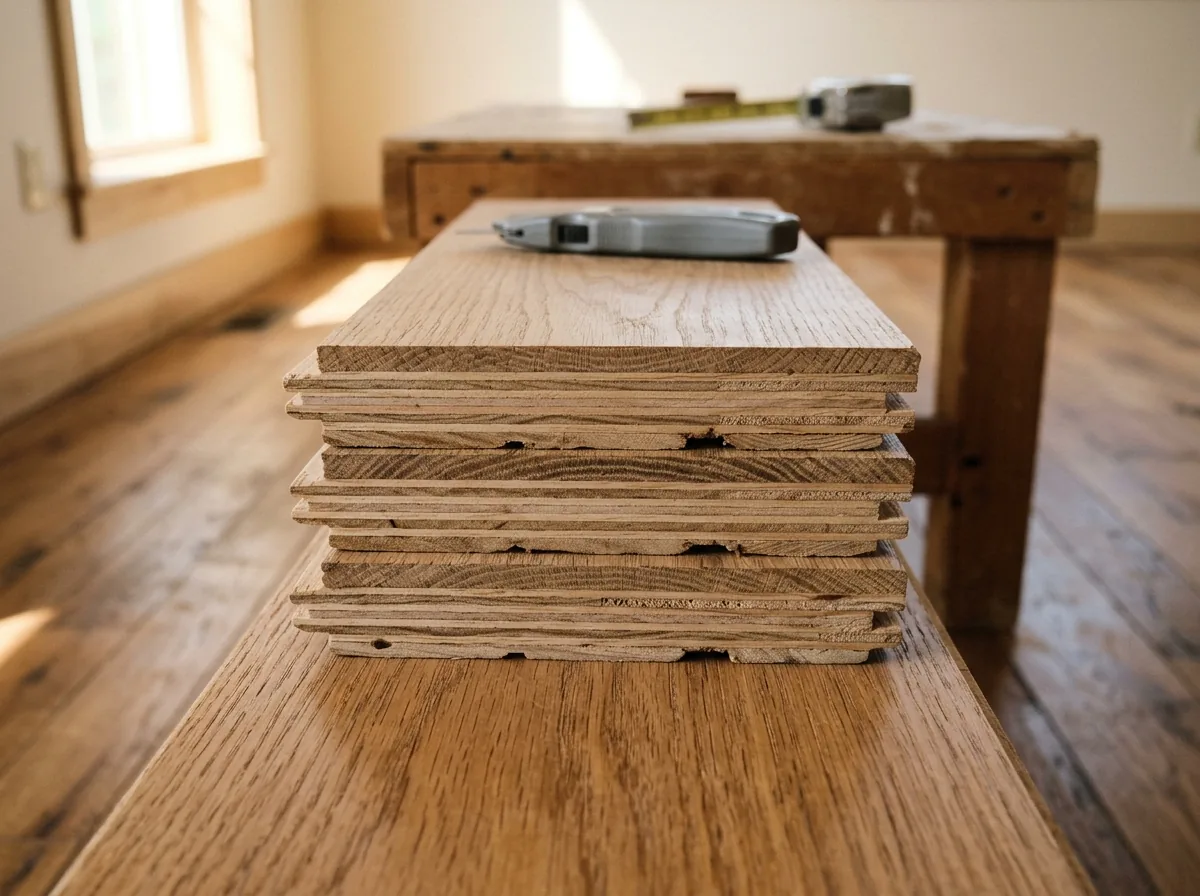
An engineered plank is a real-wood veneer on a cross-layered core of plywood or high-density fiberboard, with a balancing back layer. HomeGuide's grades:
| Grade | Thickness | Installed per sq ft |
|---|---|---|
| Budget, 3 core layers | 3/8 inch | $5 to $17 |
| Mid-range, 5 core layers | 1/2 inch | $9 to $20 |
| High-end, 7+ core layers | 5/8 to 3/4 inch | $12 to $24+ |
The veneer runs 2 to 6 mm; how many sandings each thickness allows is on Engineered Hardwood Refinishing. Thicker veneers often come with a UV-cured aluminum oxide finish. HomeGuide rates the budget 3-layer grade for low-traffic rooms only. Look at the end of a plank: the thickness of the top layer tells you more about the floor's life than the brand name does.
Why Torrance homeowners call Torrance Wood Flooring
- Free to call or use the form; the referral costs you nothing
- Your request goes to one independent contractor, not a bidding list
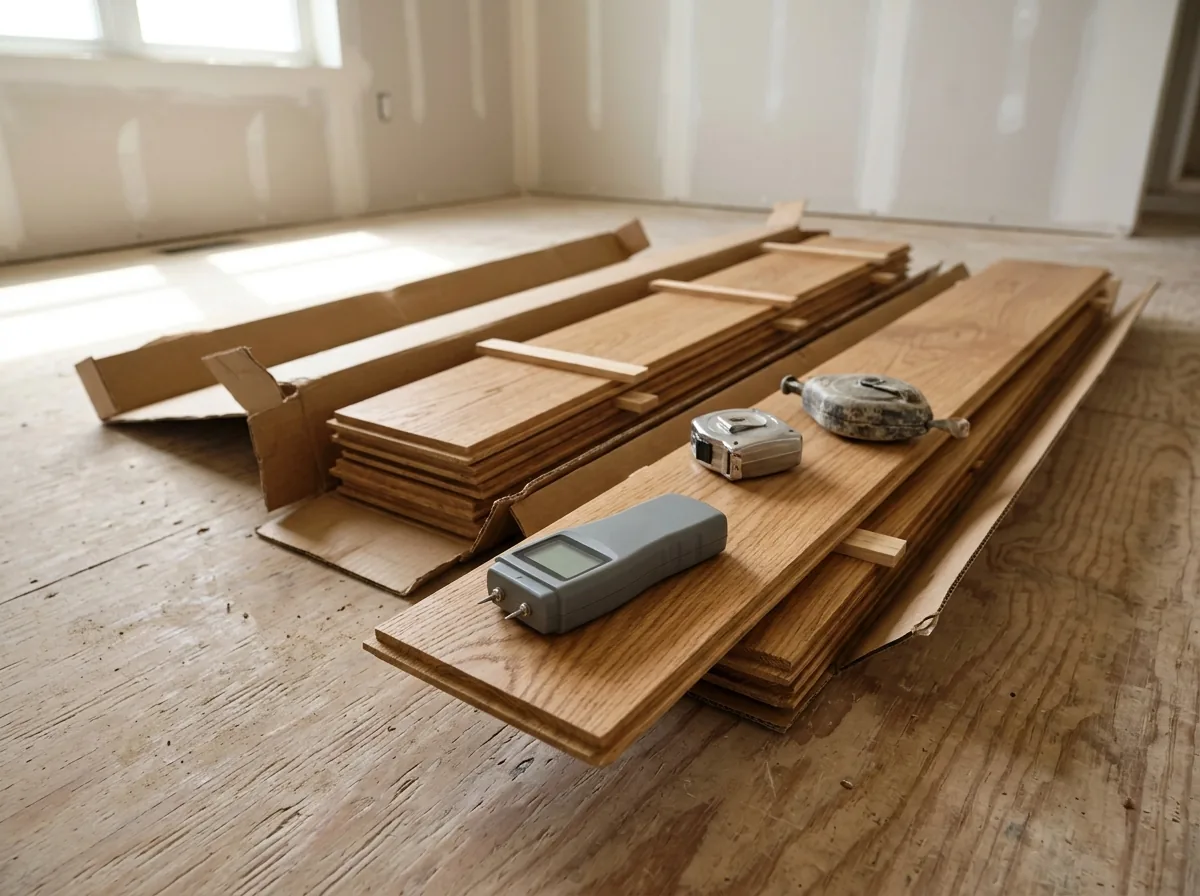
- Ask for a moisture reading and a written line-item estimate
- California caps the down payment at 10% or $1,000, whichever is less
Formaldehyde Labels on Engineered Cores
The glued plywood, MDF or particleboard inside an engineered plank is regulated composite wood. California's Air Resources Board adopted its formaldehyde control measure on April 26, 2007. The federal TSCA Title VI standard uses the same limits as CARB Phase II, and composite wood made or imported after March 22, 2019 must be labeled TSCA Title VI compliant. EPA updated the rule in October 2026. Before installation day, check the label on the cartons. Boxes without one are worth a question.
Engineered or Solid on Your Floor
| Engineered | Solid | |
|---|---|---|
| Installed (HomeGuide) | $9 to $20 per sq ft | $11 to $25 per sq ft |
| Over a concrete slab | Yes: glued or floated | Not directly |
| Seasonal movement | Less prone to expand and shrink | More prone |
| Refinishes | Limited by veneer thickness | Many |
On a slab, engineered is usually the realistic choice. On a raised wood subfloor, both work, and the choice comes down to budget and how many sandings you want the floor to have. Neither is waterproof.