
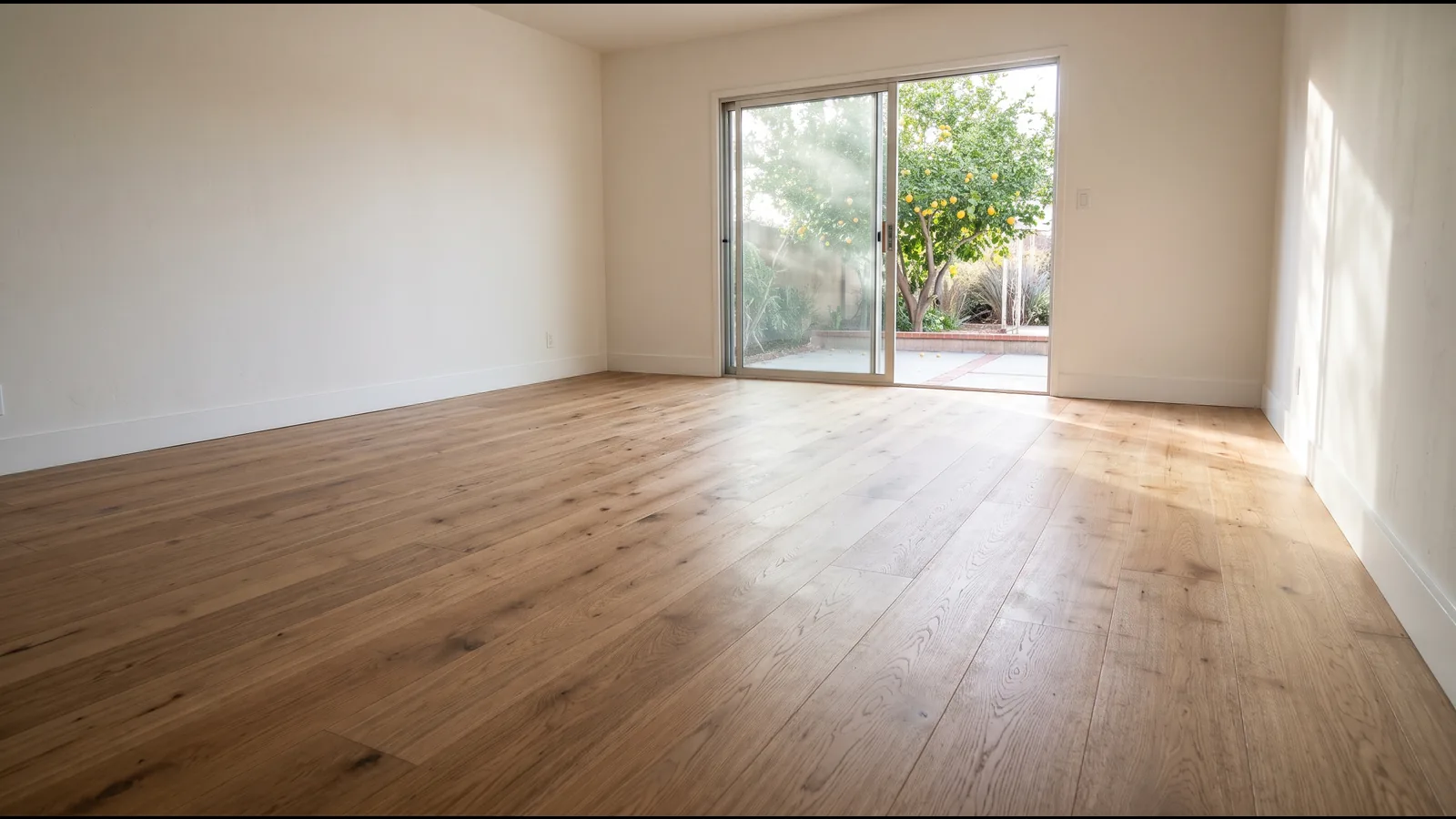
Engineered Hardwood Refinishing by Wear Layer
Engineered planks have a real wood top layer glued over a core, and that top layer is all a finisher can work with. HomeGuide says engineered floors can be sanded if the wear layer is at least 2 mm, and puts most engineered floors at 1 to 3 refinishes over their life, where solid wood takes 4 to 10. The NWFA's magazine puts the no-sand line at 3/32 inch (2.38 mm) and says a traditional sand job takes off 1/32 to 1/16 inch, about 0.8 to 1.6 mm. The math is tight, so the job depends on that one measurement.
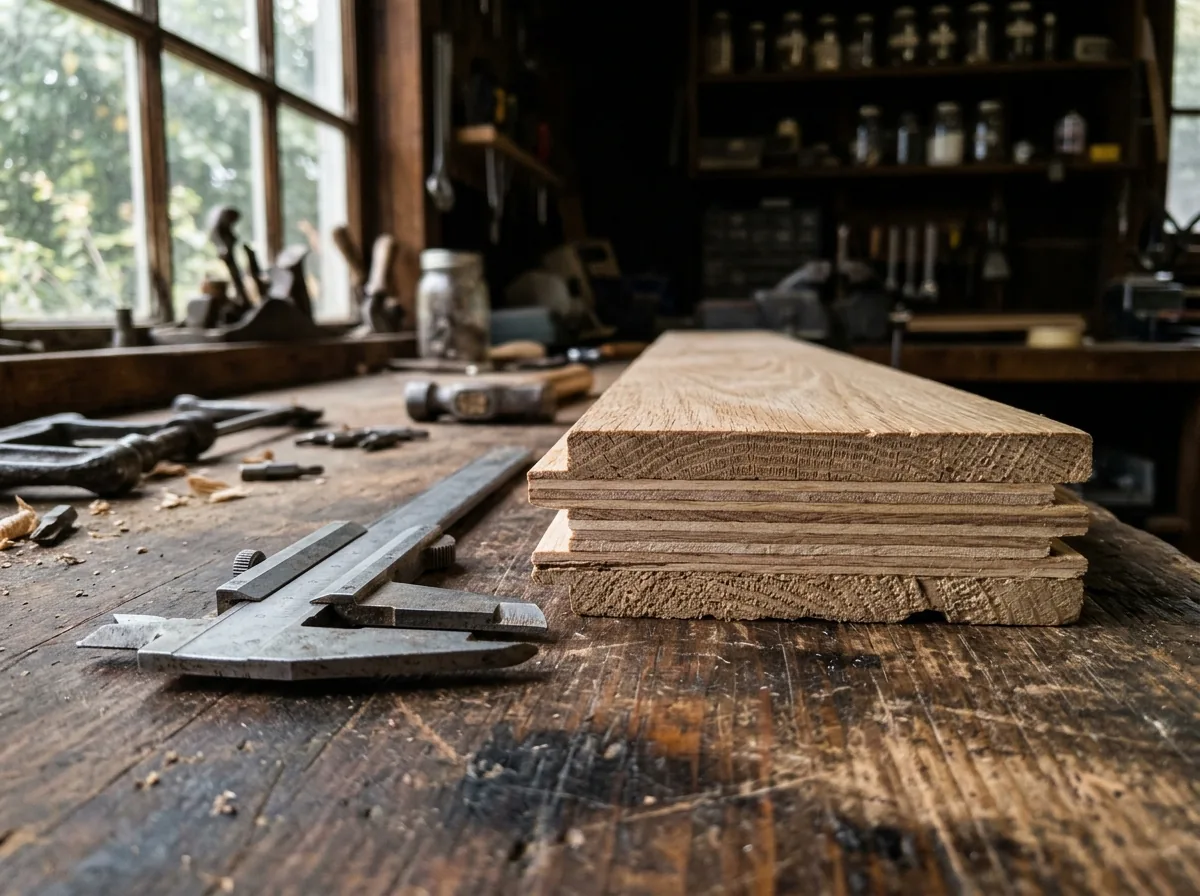
Thick Wear Layer: Full Sand
With 3 mm or more of wood on top, which one maker calls common in high-quality engineered products, there's room for a real sand. Fixr describes the usual engineered refinish as light sanding that removes around 2 mm or less. What changes is the technique:
- Multi-disc sanders and diamond abrasives break through the finish while removing less wood
- Flattening an uneven floor uses up wear layer, because the first cuts level it as they go
- Stain is possible on bare wood, the same as solid; colors are on Hardwood Floor Staining
Thin Veneer: Screen and Recoat Only
Wear layers run from 0.6 mm to 4 mm, and the thinnest can only be recoated, never sanded. HomeGuide adds that floors with very thin layers or acrylic finishes can't be sanded at all. A thin-veneer floor that's dull but not worn through can still get a fresh coat over the factory finish. Once the finish is gone and the veneer shows wear, the realistic fix is new planks. The coat itself is explained on Screen and Recoat.
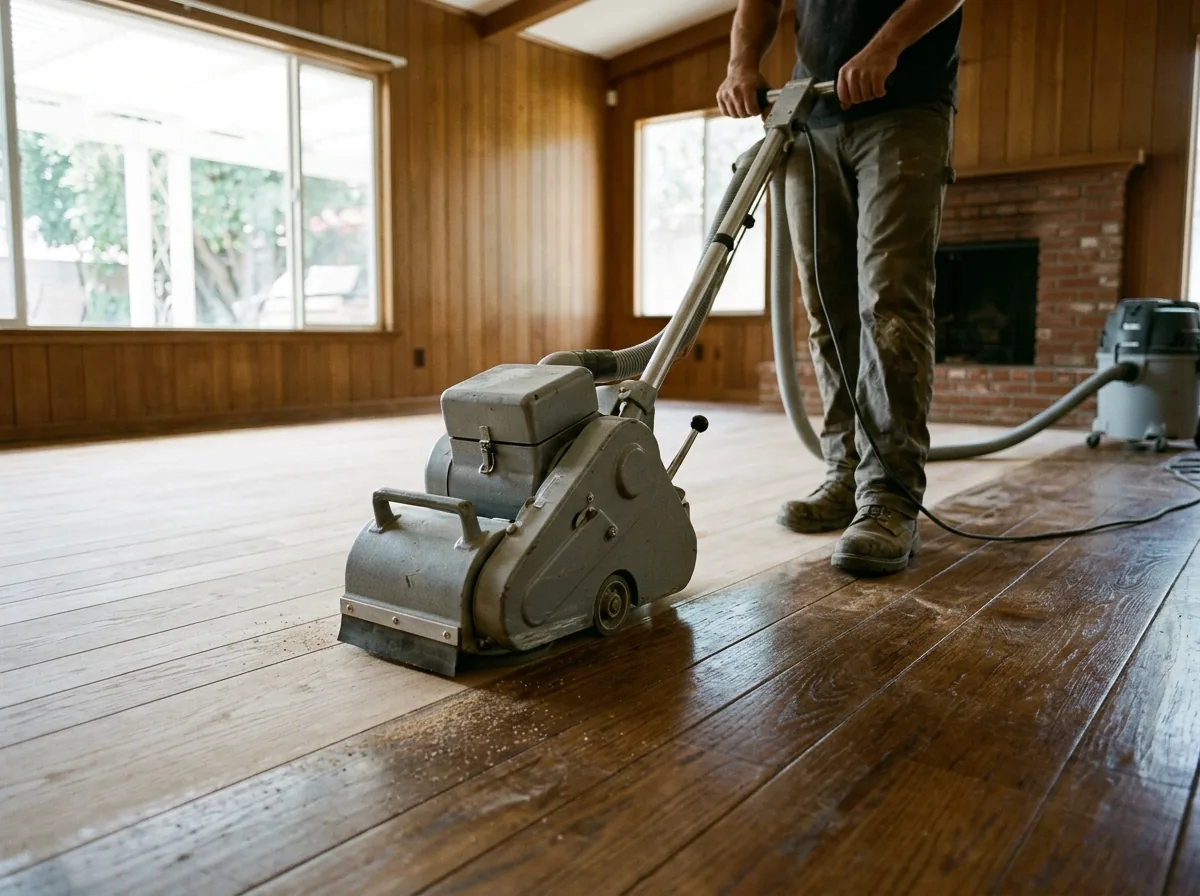
Aluminum-Oxide Prefinished Boards
Some prefinished floors carry a high-abrasion factory finish such as aluminum oxide. The NWFA magazine says high-abrasion finishes like aluminum oxide often cut best with a fine-grit ceramic abrasive first, then coarser grits to reach wood. For a recoat without sanding, the same publication says a high-abrasion factory finish may need a chemical pretreatment from the finish maker, and that Teflon-infused factory finishes can't be recoated at all; a permanent-marker line that wipes off is the tell. Beveled edges are another problem, since a screen can't reach into the grooves.
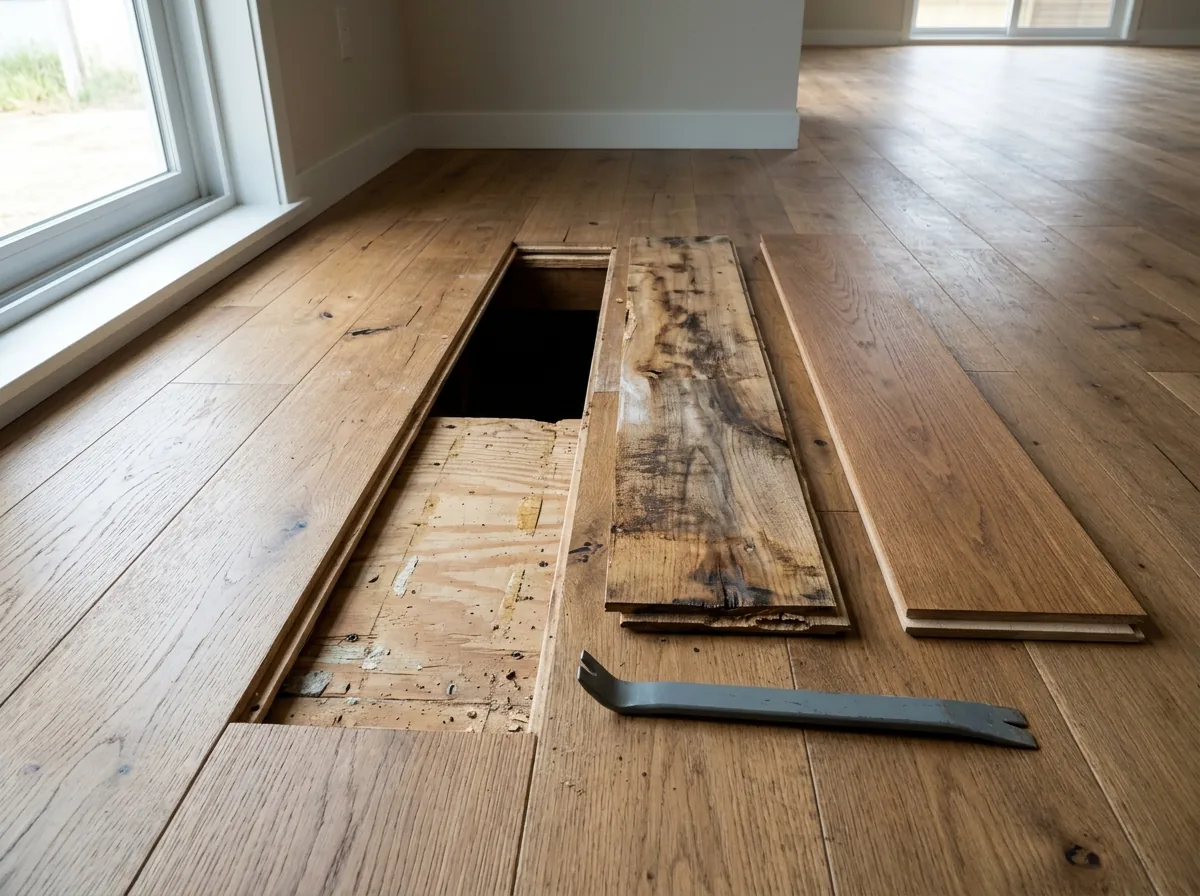
Replacing Damaged Engineered Planks
A deep gouge, a pet stain or a water-swollen edge usually means a new plank rather than sanding. HomeGuide prices replacing sections or boards at $5 to $20 per sq ft, with board repairs taking 3 to 5 hours per room. How a board comes out depends on whether the floor is glued, stapled or floating (see Engineered Hardwood Installation). Matching is the hard part with prefinished product. Leftover boxes from the original install are worth more than any color match; if you have them, say so when you call.
Why Torrance homeowners call Torrance Wood Flooring
- Free to call or use the form; the referral costs you nothing
- Your request goes to one independent contractor, not a bidding list
- Ask for a moisture reading and a written line-item estimate
- California caps the down payment at 10% or $1,000, whichever is less
Engineered Refinishing Cost and Schedule
| Item | National guide range |
|---|---|
| Engineered refinish | $2 to $6 per sq ft (HomeGuide) |
| Engineered refinish | $3 to $5 per sq ft (Fixr) |
| Recoat only | $1 to $2 per sq ft (Fixr) |
| Board or section replacement | $5 to $20 per sq ft (HomeGuide) |
A full sand and finish takes 2 to 6 days. A recoat skips sanding, so the wait is the finish drying; cure times by finish are on Hardwood Floor Finishes. Solid-floor ranges and room-size costs are on Hardwood Floor Refinishing.
How to Find Your Wear Layer Before Anyone Sands
You can often check it yourself before the visit:
- STEP01
Paperwork
The product spec sheet or box label lists the wear layer in millimeters. The NWFA also runs an Engineered Wood Flooring Refinishable Program that flags products with enough wood to sand. - STEP02
A floor vent
Lift the register and look at the cut end of a plank. The top band of real wood, above the core, is the wear layer. - STEP03
A threshold or stair edge
Where the floor ends at a reducer or nosing, the plank edge is sometimes visible.
If the top band measures under about 2 mm (3/32 inch), plan on a recoat, not a sand. A good finisher will measure in more than one spot, since earlier sanding may have thinned some areas more than others.