Hardwood Floor Repair, Damage by Damage
Most repairs touch a handful of boards. The fix depends on whether the damage is in the finish, in the wood, or in how the boards are fastened.
Single Board and Section Replacement
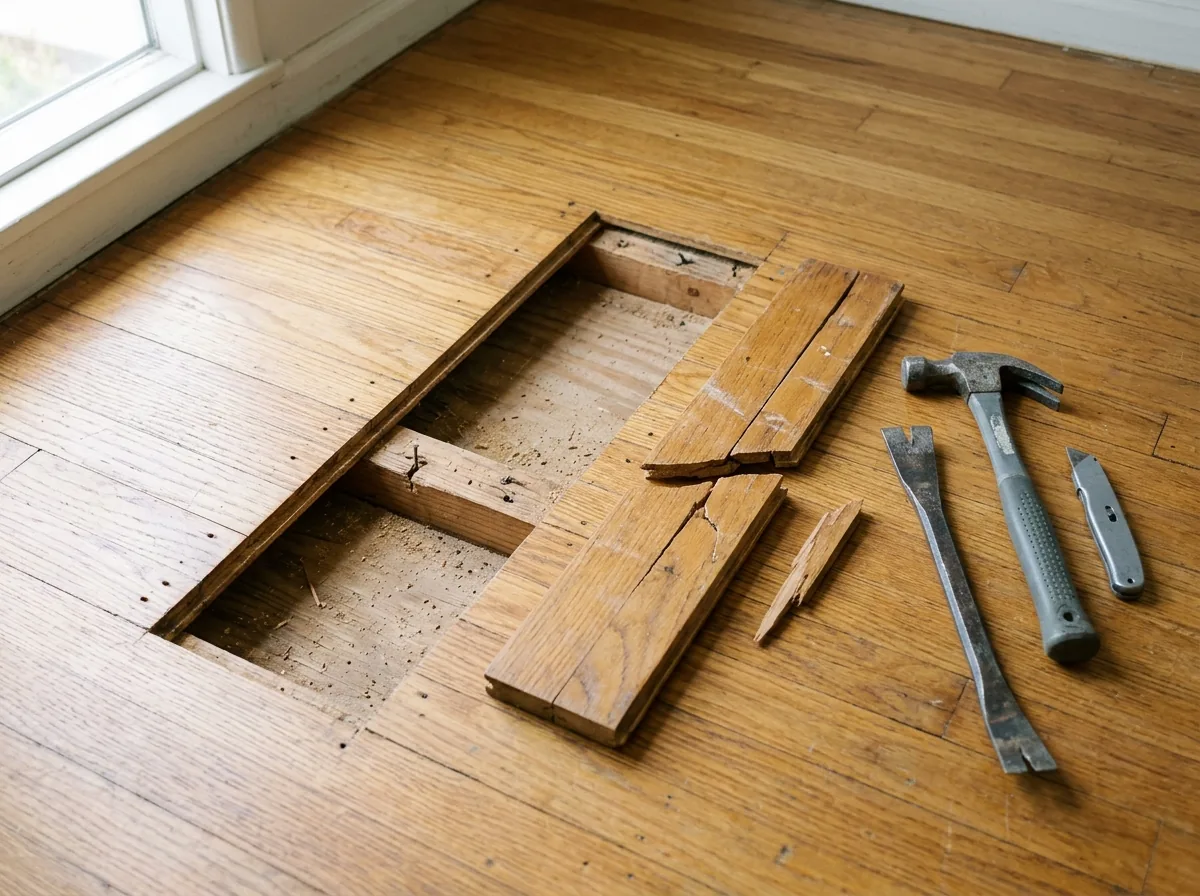
A board that's cracked, burned, split or stained deep gets cut out and replaced with one of the same species, width and thickness. HomeGuide prices sections and boards at $5 to $20 a square foot in its table and $7 to $25 in its text, depending on the wood, the subfloor and the labor. It also warns that with widespread damage, it may be easier to replace the whole floor than to keep matching it. Damage with a cause of its own has its own page: water damage, pet urine.
Lace-In Patches Where Walls or Vents Were Removed
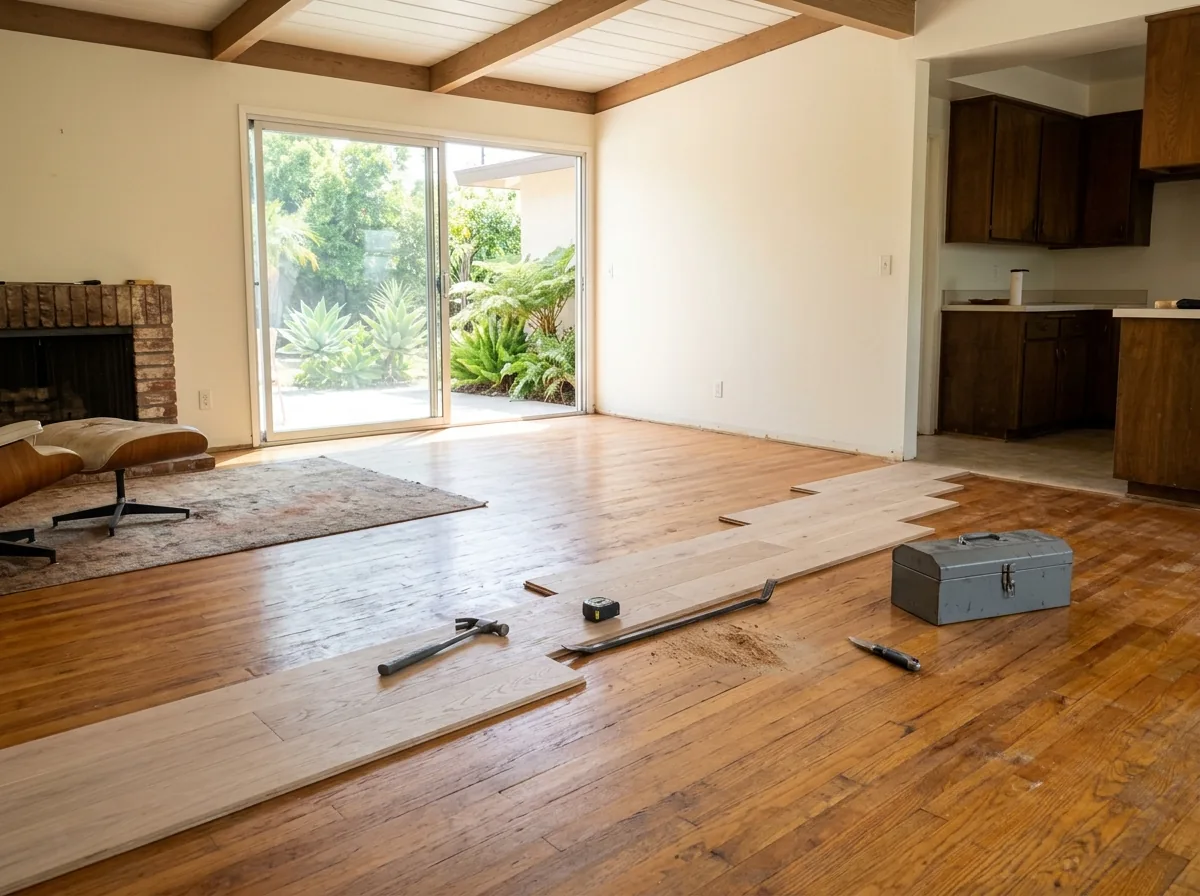
Open-plan remodels leave a bare strip where a wall stood. Moving a floor register leaves a rectangular hole. Both get laced in: old boards at the edge are cut back to uneven lengths and new ones are woven in, so the joints stagger.
- Standard strip is 2 to 3 inches wide; measure yours before the visit
- NWFA spaces strip end joints at least 6 inches apart row to row, and a lace-in should follow the same rhythm
- Bring a spare board if one turned up in the garage; it answers the species question on the spot
A lace-in only blends once the patch and the floor around it are sanded and finished together. Budget for at least that room's refinish (Hardwood Floor Refinishing).
Gaps, Cracks and Loose Boards
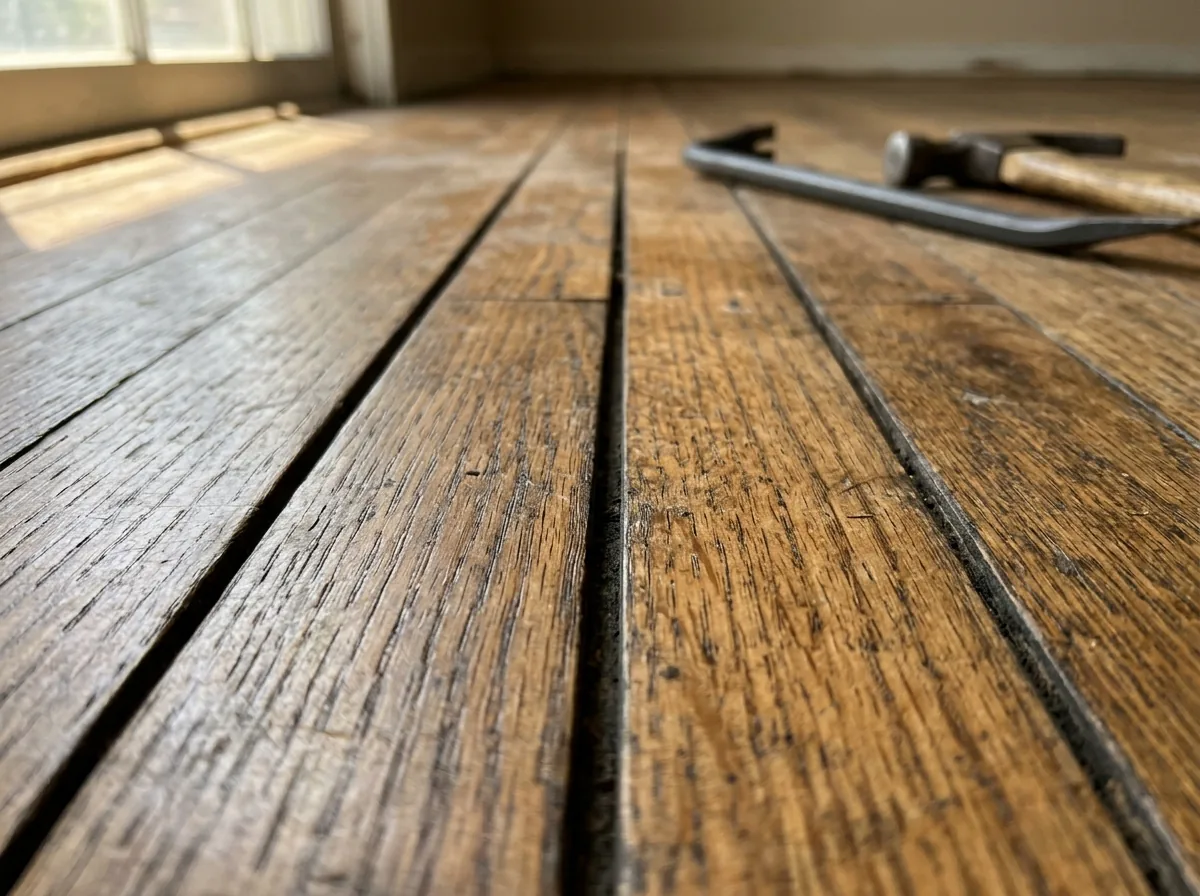
Some gaps are simply the floor responding to the season. Wider boards open wider gaps. Gaps that never close, boards that rock underfoot, or hollow spots are a repair:
- Hollow spots: epoxy injected under the board to bond it down
- Gaps that stay open: wood filler, or wood and glue on wider ones
- Damaged boards: replaced when they're beyond repair
When gaps look abnormal, a good floor mechanic takes moisture readings and compares them with the install records, if there are any. Squeaks have their own page, Squeaky Floor Repair, and so does a soft or sagging subfloor: Subfloor Repair.
Deep Scratches and Gouges
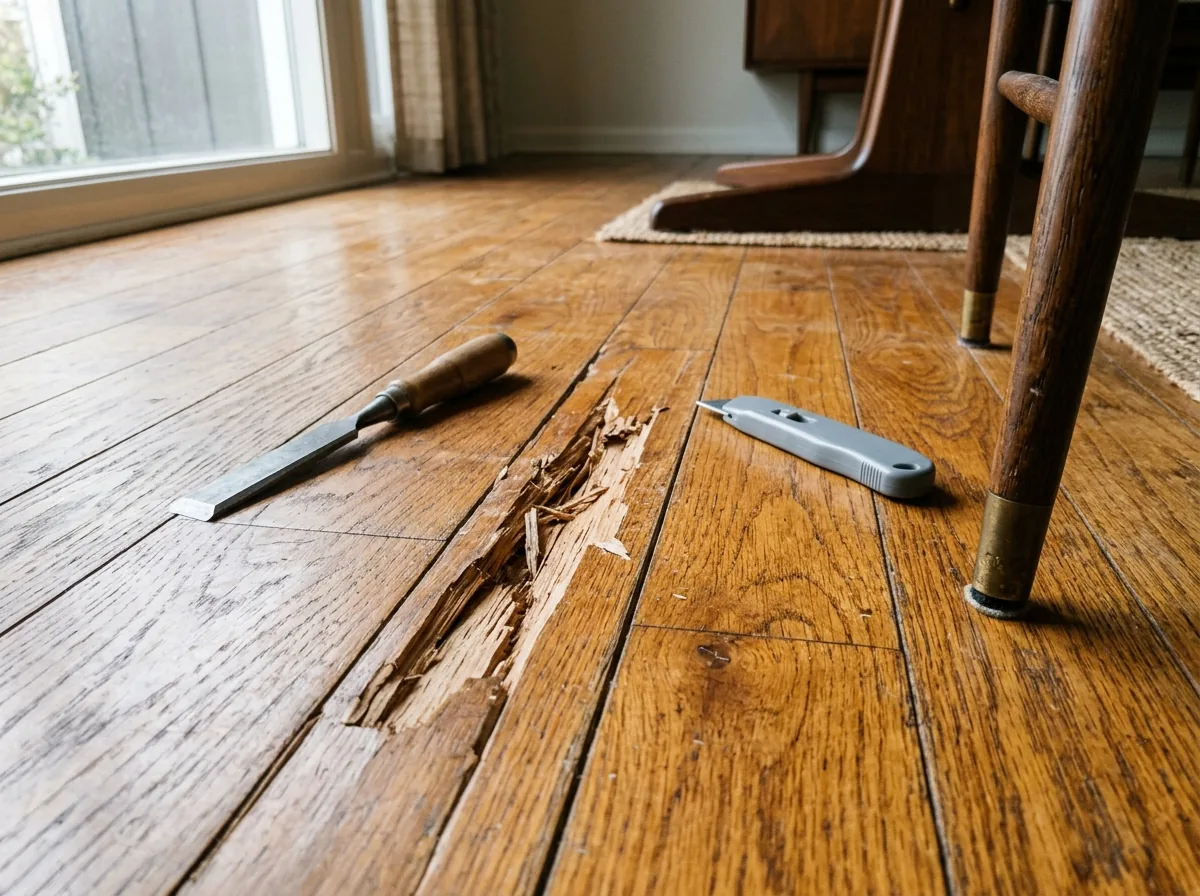
If a scratch hasn't gone through the finish, you can usually touch it up yourself: HomeGuide lists stain pens and markers at $6 to $13 and putty at $4 to $15. Scratches into the wood need filling, sanding, staining and a new finish over the spot, at $25 to $100 each. A gouge that splits the grain usually means new boards. HomeGuide says deep gouges call for a professional.
Why Torrance homeowners call Torrance Wood Flooring
- Free to call or use the form; the referral costs you nothing
- Your request goes to one independent contractor, not a bidding list
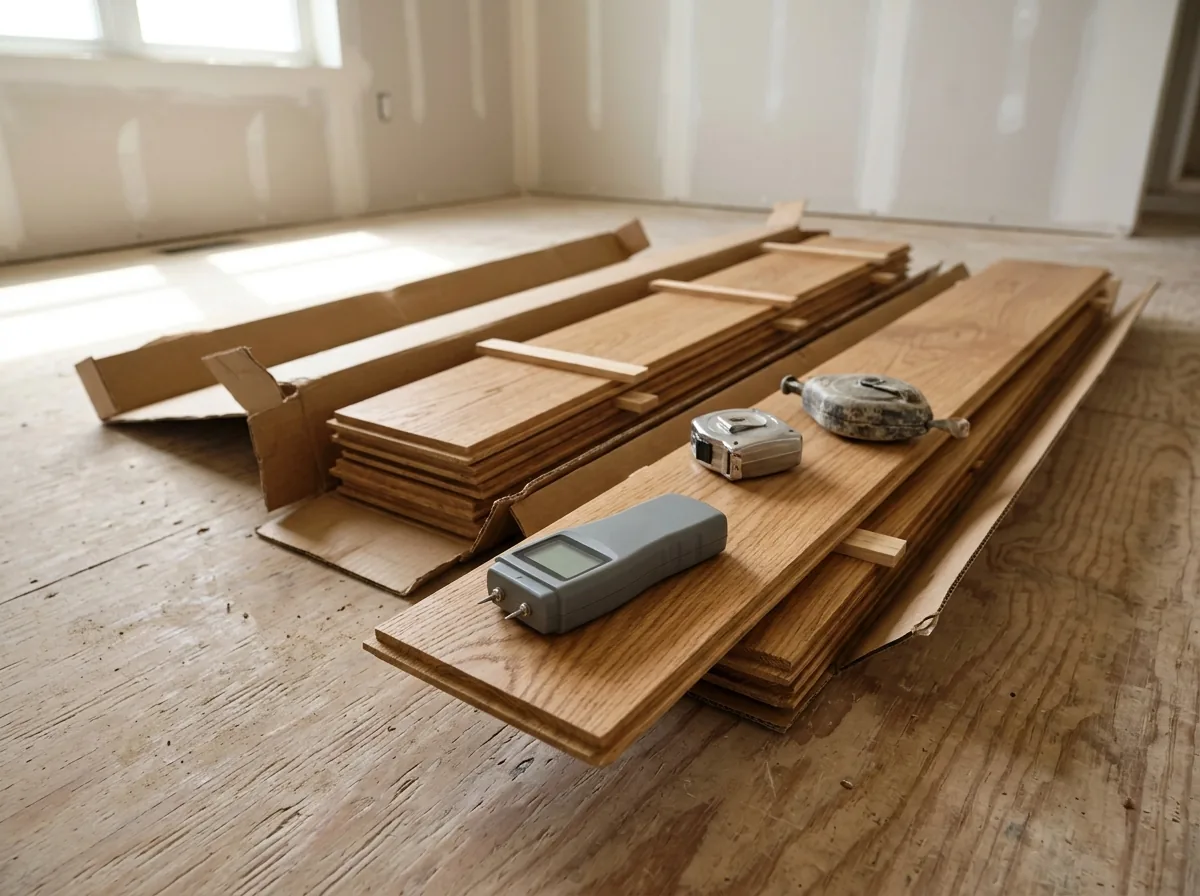
- Ask for a moisture reading and a written line-item estimate
- California caps the down payment at 10% or $1,000, whichever is less
Checking a Floor Repairer's License in California
Small repairs are where the license question comes up, because the jobs are small enough that people skip asking.
The class
CSLB's C-15 Flooring and Floor Covering license covers installing wood floors, "including the finishing and repairing thereof"The exemption
no license is needed only if the whole job, labor and materials, is under $1,000, needs no building permit, and the worker has no employees and doesn't advertise as a contractor (Business and Professions Code 7048)The change
that line rose from $500 to $1,000 on January 1, 2025; some CSLB consumer pages still say $500The check
every contractor ad must carry the license number; look it up on the CSLB site or call (800) 321-2752
Contract, deposit and cancellation rules for bigger jobs are on the homepage.
Repair or Refinish the Whole Floor?
HomeGuide's line is a useful one: refinishing restores a lightly worn floor, while repair handles damage, meaning warped, uneven or broken boards. Board work alone takes 3 to 5 hours a room. Water, subfloor or joist repairs take 1 to 2 days. If the floor shows water damage, many exposed nails or several past sandings, HomeGuide says replacement is the better call. Our view: fix the boards first, then decide on a refinish once the floor is sound. Doing it the other way around means sanding twice.