
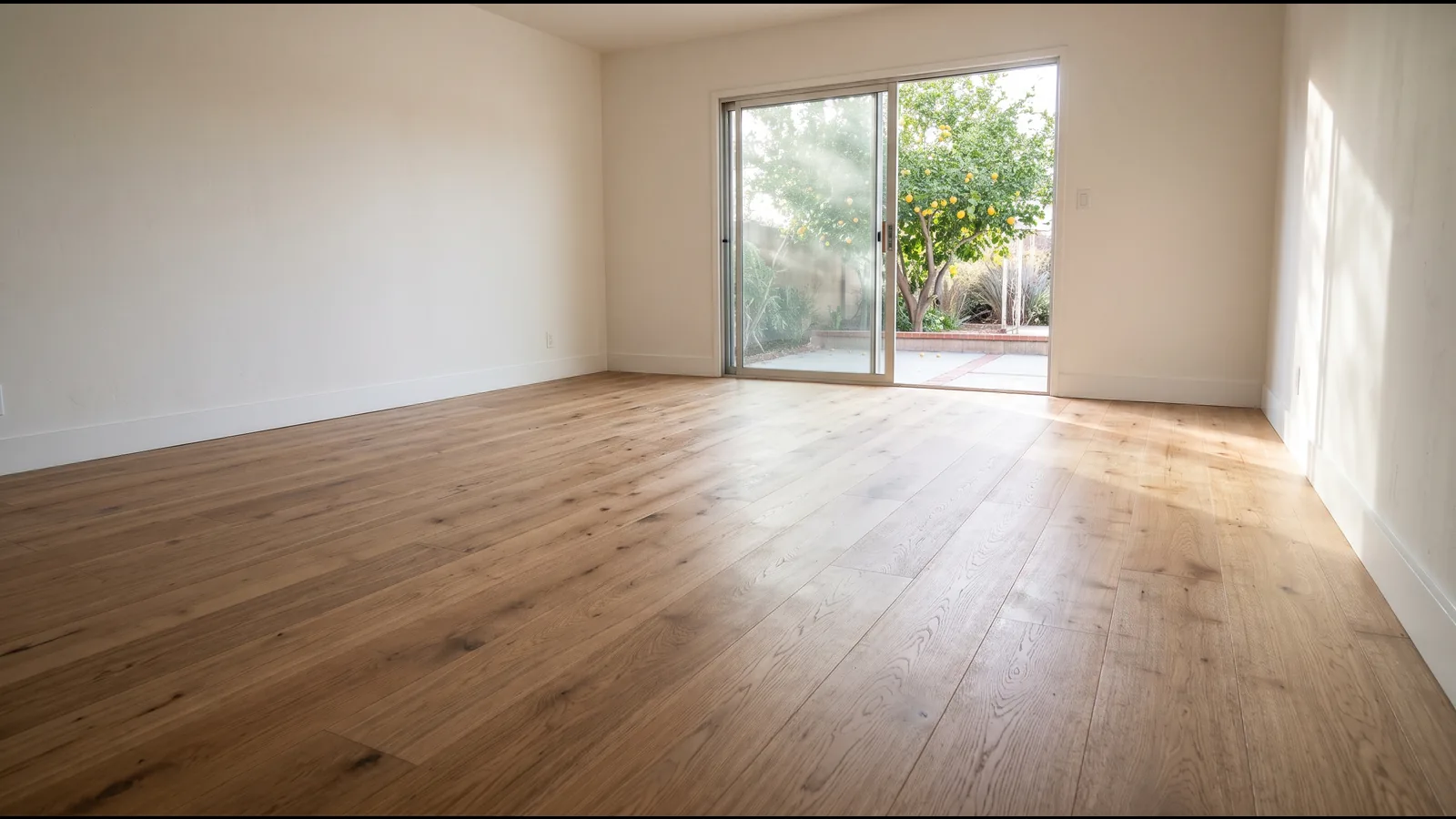
Squeaky Floor Repair Methods
Where the fix happens depends on what's above the noise and what's below it.
Fixing From Above Through the Hardwood
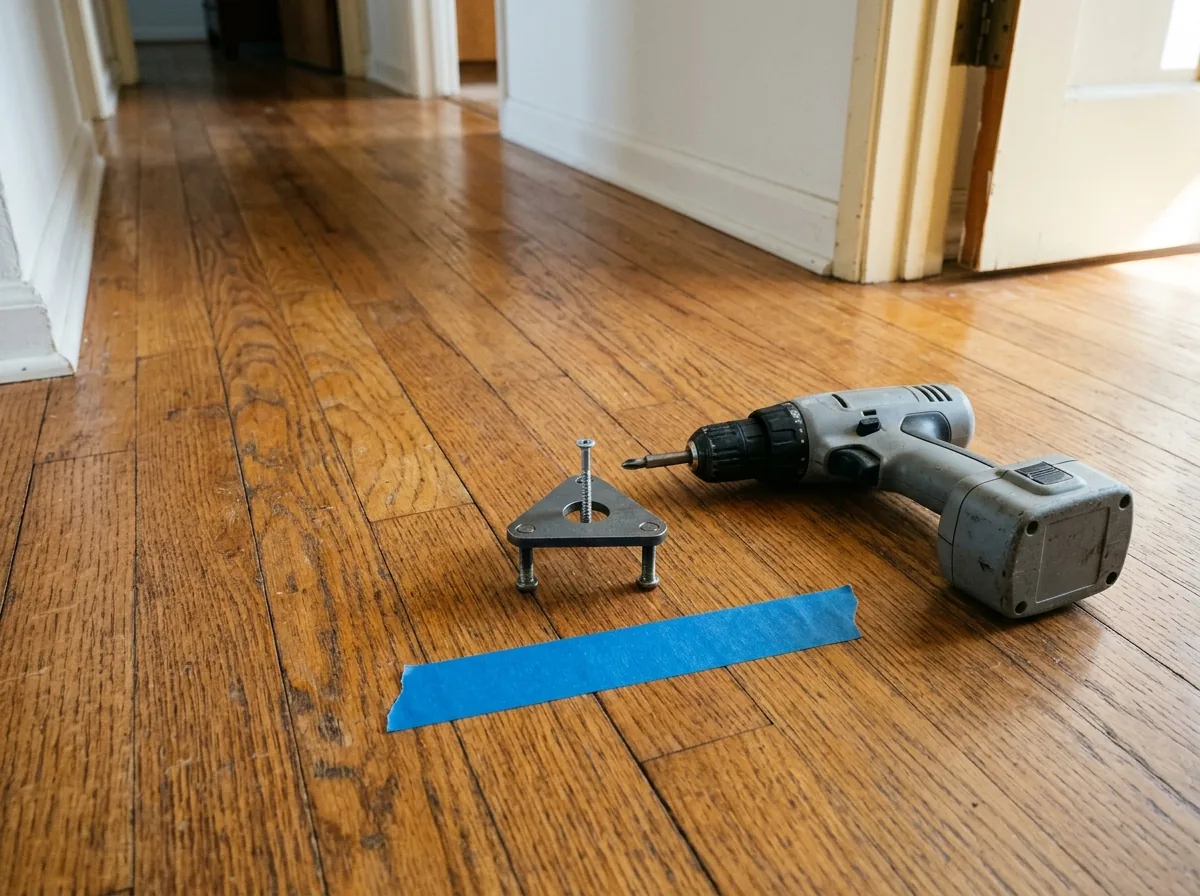
When there's no access from below, the floor is pinned from the top. Kits such as Squeeeeek No More use scored screws driven through a depth fixture: on hardwood the maker says to pre-drill, drive into the plank that moves, and let the head snap about 3/8 inch under the surface. The tiny hole gets wood filler or a wax stick in the floor's color. Most spots need more than one screw, set roughly 4 inches apart along the joist.
Fixing From the Crawlspace Below
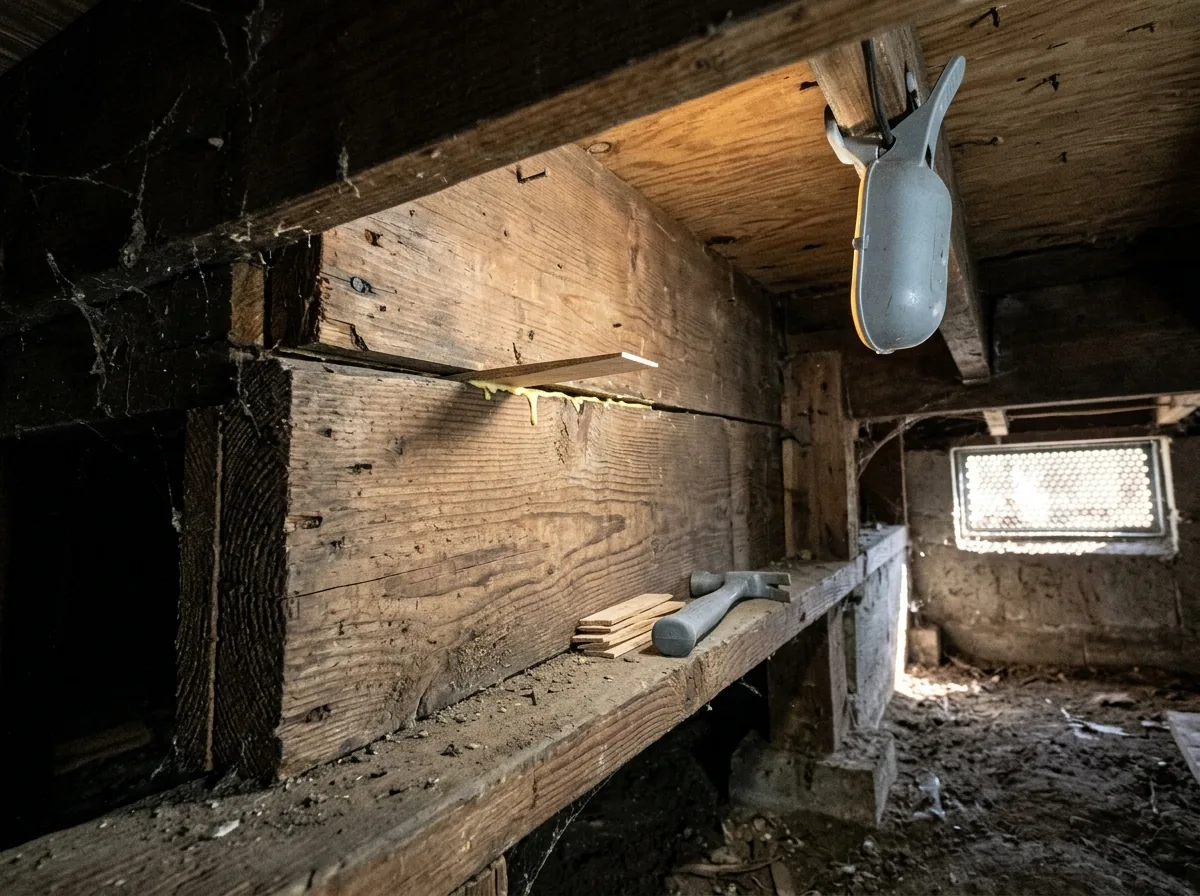
On a raised floor, the carpenter can work from underneath while someone walks above. A gap between joist and subfloor gets a thin shim coated in carpenter's glue, tapped in gently, since overdriving it lifts the floor above. A screw angled through the joist and shim holds it. Where a gap is too long for shims, a bracket hooked over the joist pulls the plywood down. This route leaves the finished floor untouched.
Squeaks Under Carpet
Carpet hides where the noise starts, but the fix is simpler. A tripod-style fixture sits on the pile, a breakaway screw goes through carpet, pad and subfloor into the joist, and the head snaps off below the carpet surface. The kit's joist-finding screw is made for carpeted plywood floors, not for hardwood. If the carpet is coming up anyway, see Carpet to Hardwood.
Squeaky Stair Treads
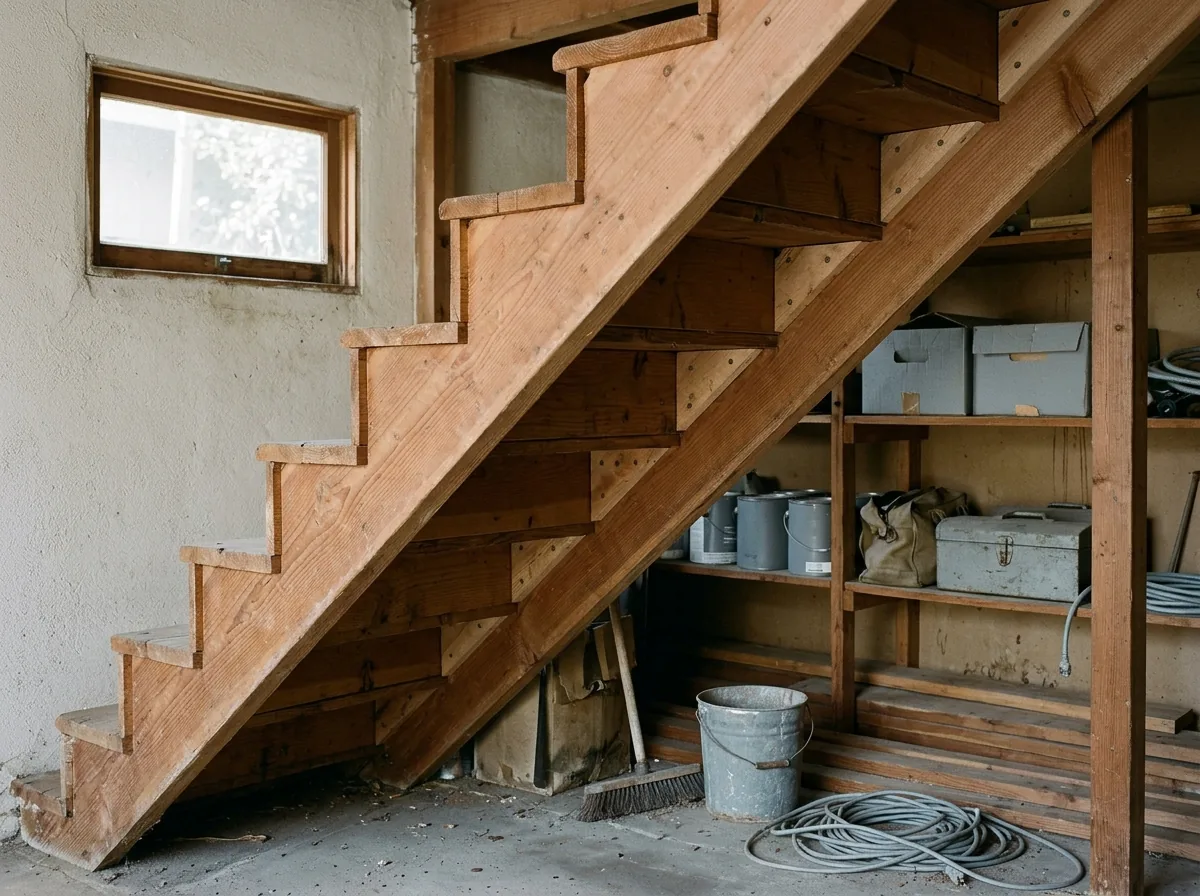
This Old House calls stairs often the noisiest part of a house, because each tread meets a riser and a stringer. With the back of the staircase open, glued shims go into gaps and wood blocks are screwed into the corners where risers meet treads. Closed stairs get shims tapped into loose joints from the top, trimmed flush, and sometimes a quarter-round molding glued along each step. New treads are a different job: see Hardwood Stairs.
Why Torrance homeowners call Torrance Wood Flooring
- Free to call or use the form; the referral costs you nothing
- Your request goes to one independent contractor, not a bidding list
- Ask for a moisture reading and a written line-item estimate
- California caps the down payment at 10% or $1,000, whichever is less
What Makes a Hardwood Floor Squeak
Three explanations come up across the sources:
Loose nails
The Squeeeeek No More instructions say nails working loose cause most squeaks; on plywood floors the board slides on the smooth nail shank.Subfloor off the joists
HomeGuide traces squeaks to the subfloor separating from the joists or a weakened floor structure.Shrinkage
Fixr points to houses settling and hardwood drying and shrinking, so boards rub against each other.
Talcum powder or powdered graphite brushed between boards can quiet friction for a while, but it doesn't fix a loose subfloor. NWFA's own instruction before a new floor goes in is to refasten a squeaky subfloor to the joists. A squeak that comes with a soft spot, a sag or a water stain is a different conversation: see Subfloor Repair.
Squeaky Floor Repair Cost and Time
One room
$200 to $1,000, up to $6,000 where the floor is badly damaged (HomeGuide)Per square foot
$10 to $50 (Fixr)Board work
About 3 to 5 hours a room; subfloor or joist work 1 to 2 days (HomeGuide)
A squeak fix is usually small enough that the license and contract rules still matter: the CSLB check and the $1,000 line are explained on Hardwood Floor Repair.