
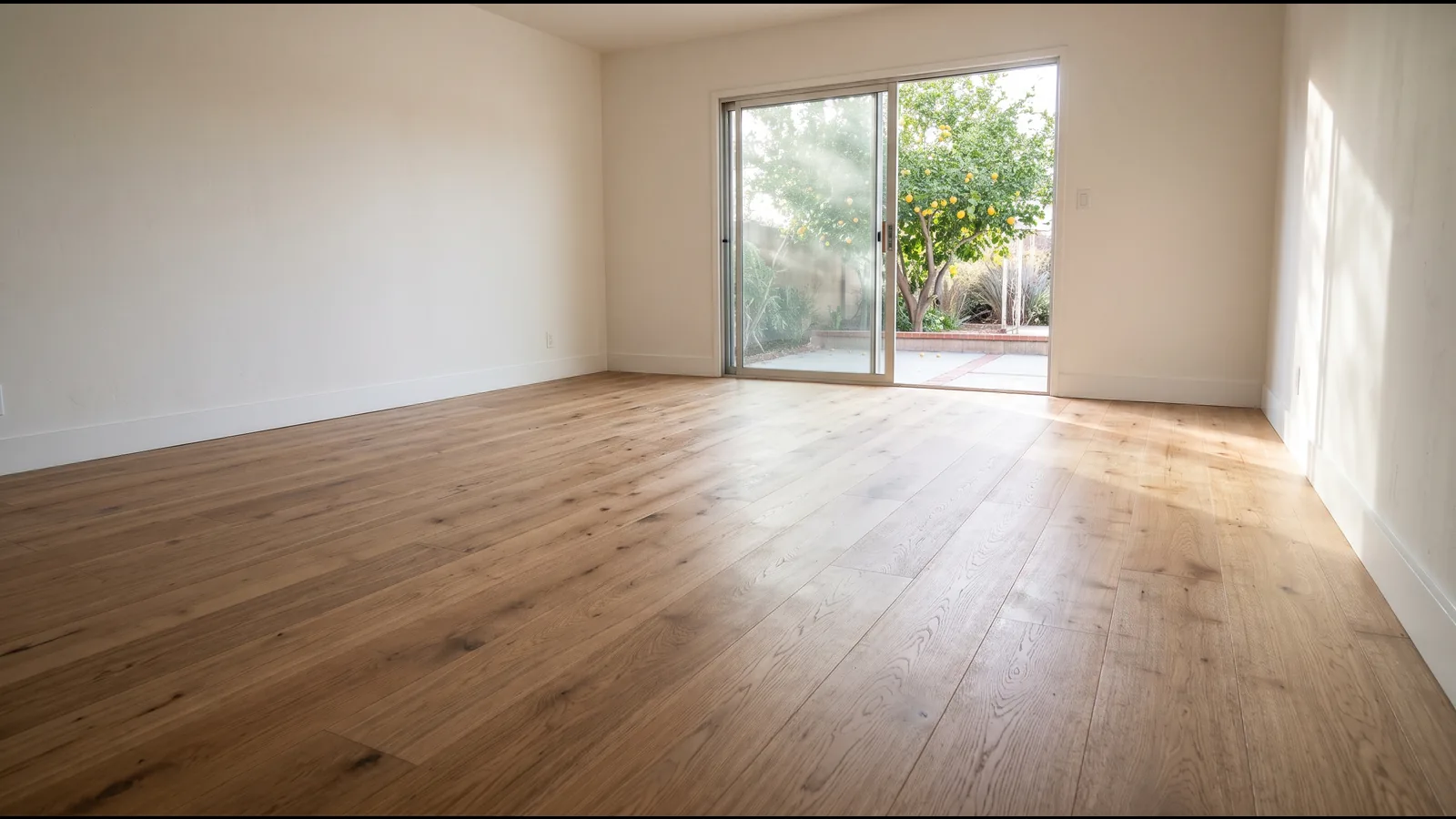
Water-Damaged Hardwood: Cupping, Crowning, Buckling and Stains
The shape a wet floor takes tells the contractor where the water sits, and that decides whether the fix is waiting, sanding or new boards.
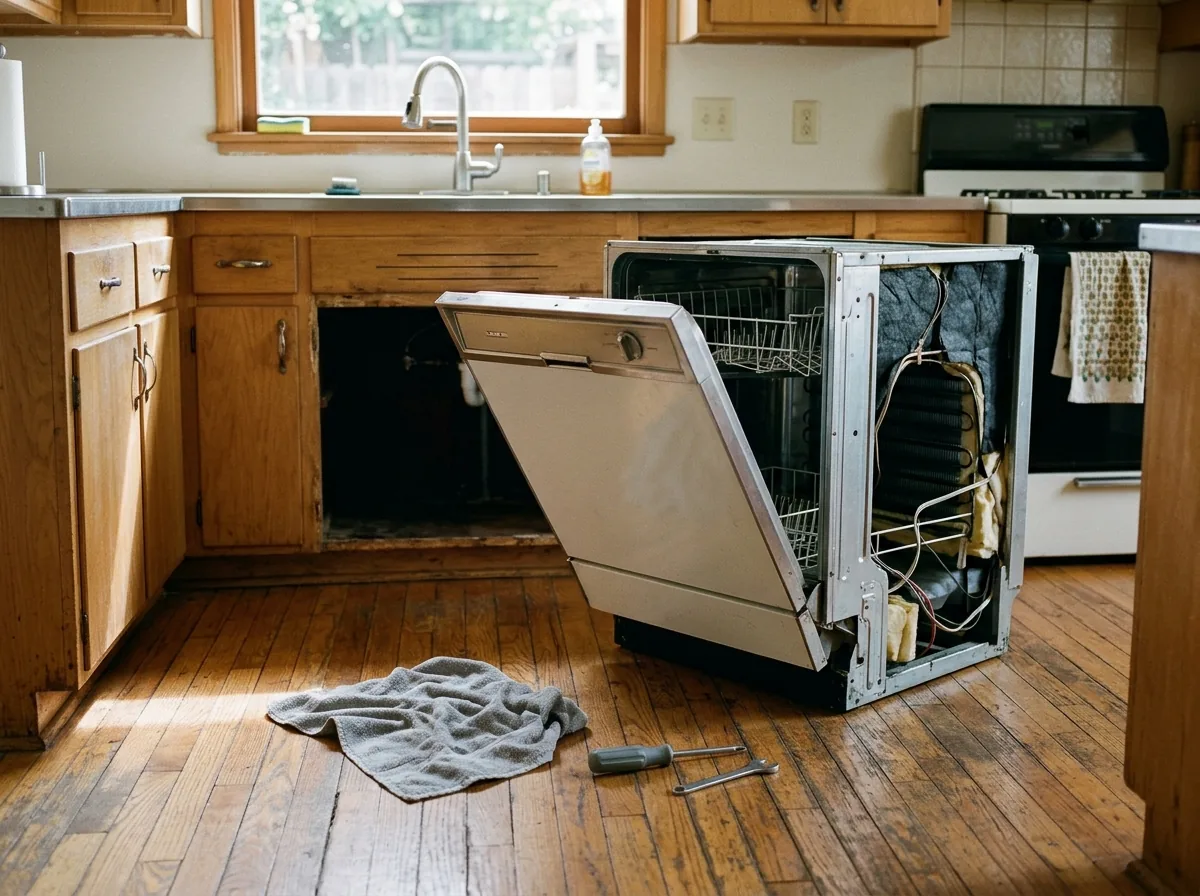
Cupping: Edges Higher Than the Middle
A cupped board means its underside holds more moisture than its face. A slow leak under a dishwasher or sink cabinet is the classic kitchen case. The good news from Wagner Meters: most leak-cupped floors flatten once the source is fixed and the wood dries out.
- Sand and refinish of cupped boards: $2 to $6 a sq ft (HomeGuide), $3 to $8 (Fixr)
- A plumber's leak check, if the source isn't obvious: $150 to $400 (Fixr)
Crowning After a Too-Early Sand
Crowning is the reverse shape, with the board's center higher than its edges. It often starts as a cupped floor that someone sanded while it was still wet. The sander shaves the raised edges, and when the wood dries those edges sink below the middle. A quote that offers to sand a freshly soaked floor "right away" is a red flag.
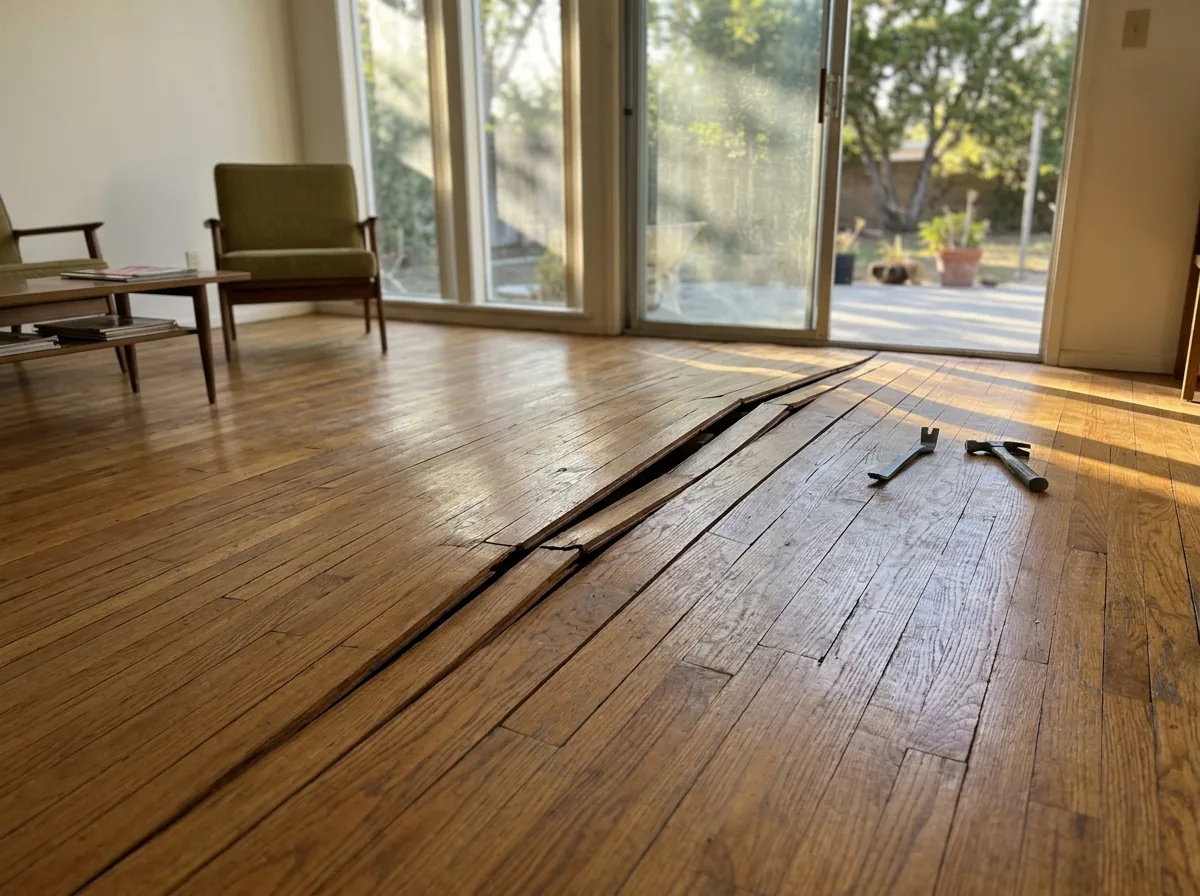
Buckling: Boards Lifted Off the Subfloor
Buckling is the extreme case: the floor pulls away from the subfloor, up to several inches high in places, usually after it sat in water. Fixr lists minor buckling at $3 to $8 a sq ft when drying settles it. Worse cases mean pulling the lifted section. If the plywood underneath is soft or delaminated, that part becomes subfloor repair.
Dark Water Stains and Board Swaps
Gray or black rings, say under a plant pot, sit in the wood itself, so sanding seldom clears them. The stained strips are cut out and matching new strips are woven in, then the area is sanded and finished with the rest of the room. The weaving method is covered on Hardwood Floor Repair, and urine stains have their own page, Pet Stain Hardwood Floor Repair.
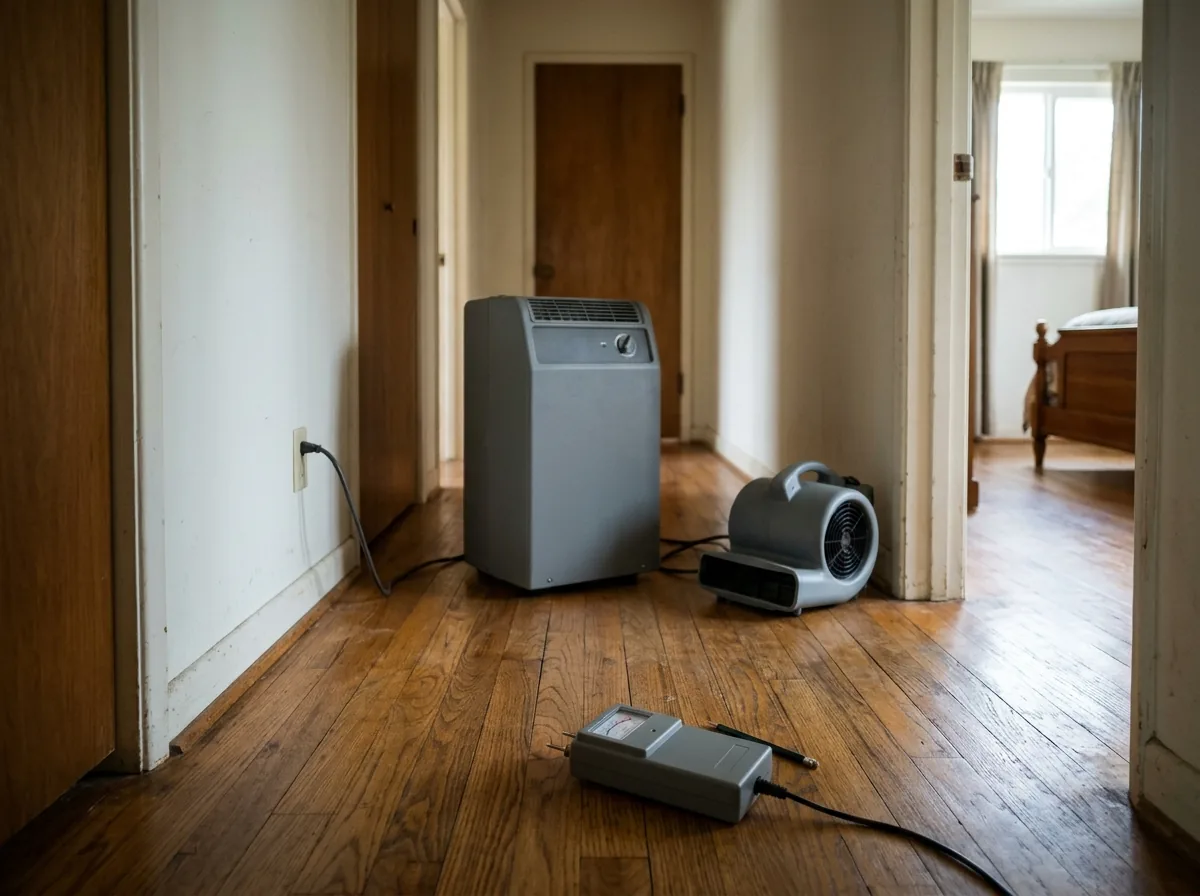
Drying and Moisture Readings Before Sanding
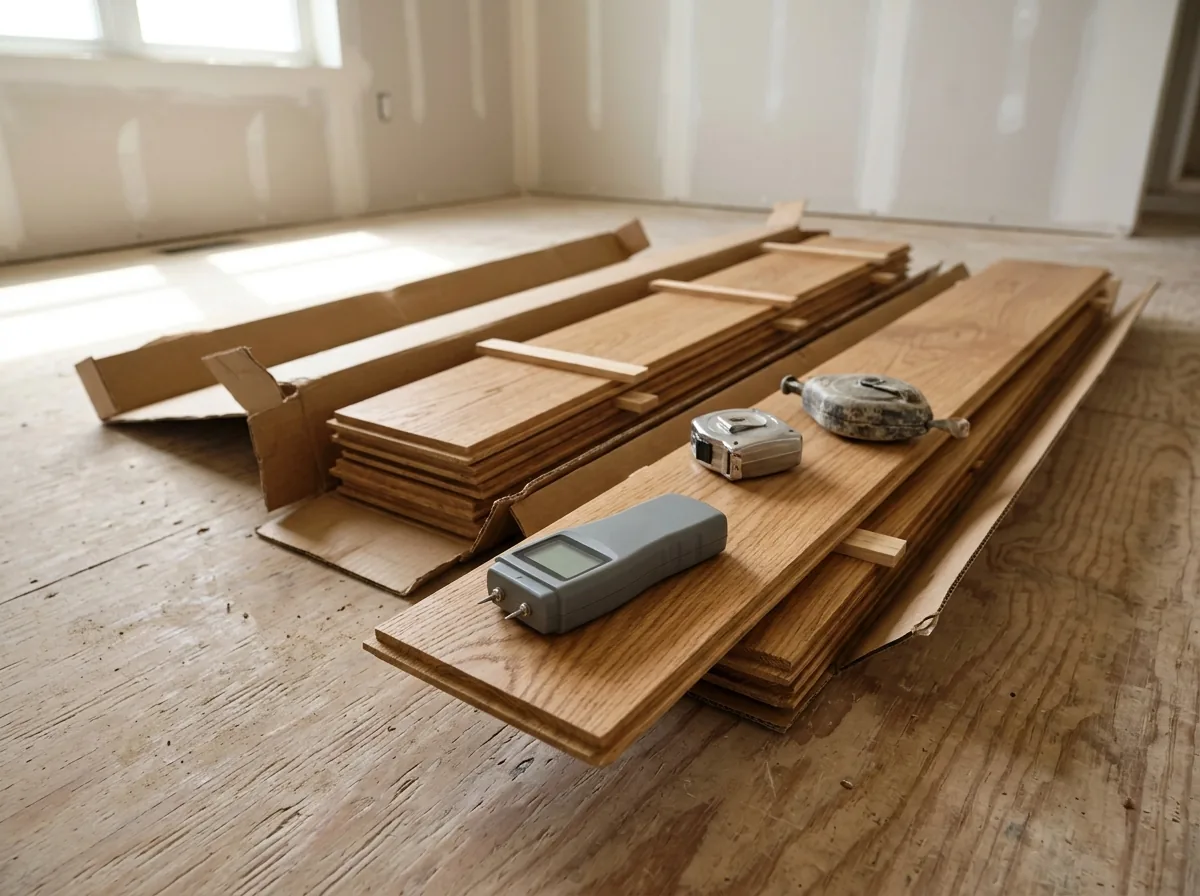
Fans and a dehumidifier go in first. EPA's mold guidance gives a 24 to 48 hour window to dry wet materials before mold is likely. After that, the meter decides. One Hardwood Floors magazine example: a floor that looked dry read 6.5 to 7 percent at the surface and above 10 percent at depth. Readings should be taken in the wet area and in a dry room of the same floor, so there's a baseline to match. The moisture targets for wood and subfloor are on Hardwood Floor Installation; if the boards are glued to a slab, see Hardwood Floors Over Concrete Slab.
Why Torrance homeowners call Torrance Wood Flooring
- Free to call or use the form; the referral costs you nothing
- Your request goes to one independent contractor, not a bidding list
- Ask for a moisture reading and a written line-item estimate
- California caps the down payment at 10% or $1,000, whichever is less
Water Damage Repair Costs and Timeline
The spread is wide because one leak can mean a light sand and another a tear-out to the joists.
| Fix | HomeGuide | Fixr |
|---|---|---|
| Water-damage repair (board replacement and blending) | $10 to $80 / sq ft | $8 to $100 / sq ft |
| Cupping, sand and refinish | $2 to $6 / sq ft | $3 to $8 / sq ft |
| Buckled floor, minor | n/a | $3 to $8 / sq ft |
| Mold removal / mildew | $15 to $30 / sq ft | $10 to $25 |
On timing, HomeGuide says water, subfloor and joist repairs take 1 to 2 days of work. The wait before that depends on the readings, and a refinish afterward adds its own days and cure time (see Hardwood Floor Refinishing).
Things to Check Before a Water Repair Starts
The leak is fixed
A floor won't settle while water keeps arriving. Torrance gets most of its yearly rain from December to March (more on local conditions), so winter leaks at doors are worth checking.- Readings are written down with dates and locations, for the wet area and a dry reference area.
Photos come before tear-out
If an insurer is involved, call them before anything is thrown away.- The estimate separates drying, board replacement, subfloor work and refinishing.
The license checks out
The CSLB lookup is explained on Hardwood Floor Repair, and California's deposit and cancel rules are on the homepage.