Hardwood Floor Installation Jobs, by Type
Most new floors come down to three questions: what the boards fasten to, whether they arrive finished, and what has to come up first.
Solid Strip and Plank Nailed Over Plywood
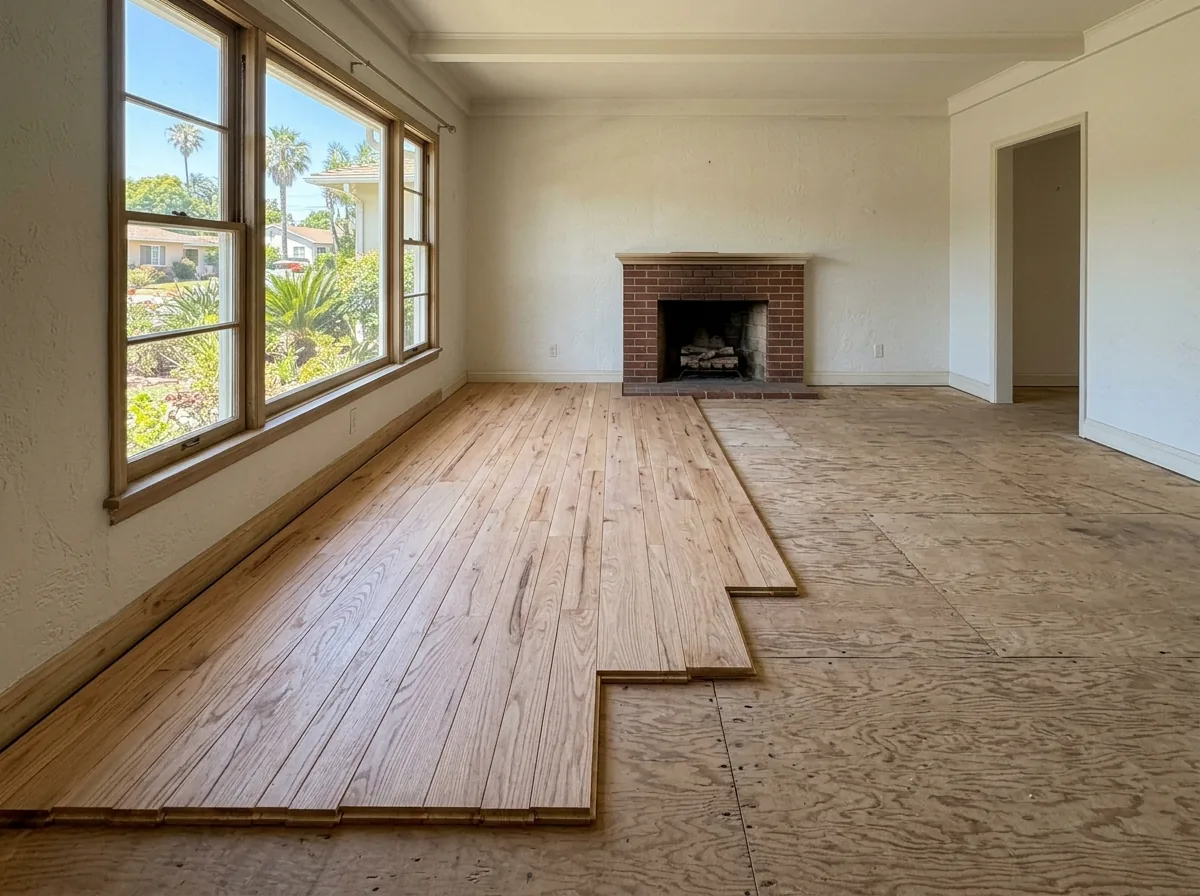
This is the classic solid floor: 3/4-inch tongue-and-groove boards blind-nailed through the tongue into a wood subfloor. In a house with a crawlspace, the subfloor and the space under it matter as much as the oak. NWFA guidelines set the basics:
- Subfloor: 5/8-inch plywood or 23/32-inch OSB on joists 16 inches apart or closer
- Direction: boards across the joists (or diagonal); running with them needs an added 1/2-inch plywood layer
- Nailing for 3/4-inch strip: two fasteners per board 1 to 3 inches from the ends, then every 8 to 10 inches
- End joints staggered at least 6 inches row to row for strip, 8 to 10 inches for 3- to 5-inch plank
- Flatness: within 1/4 inch over 10 feet
- Crawlspace: at least 18 inches to the joists, ground fully covered with 6-mil black poly
If the crawlspace floor is bare dirt, that last line is worth fixing before any wood arrives.
Prefinished or Site-Finished Boards
Prefinished boards come with the finish already cured on. Unfinished boards go down raw and get sanded, stained and coated in the room. Fixr finds the two end up close in price: about $2,200 to $4,000 for 300 square feet either way, labor included.
- Prefinished: walkable the day it's installed; Fixr recommends it for remodels where the family stays home
- Site-finished: 2 to 3 extra days before you walk on it; finish quality depends on the crew's skill
- Finish choice: water-based, oil-modified or hardwax oil, with cure times on Hardwood Floor Finishes
Our take: if you're living in the house, prefinished saves a lot of hassle. If you're matching an old floor or want a custom stain, site-finished is the way to go.
Replacing an Old Floor Room by Room
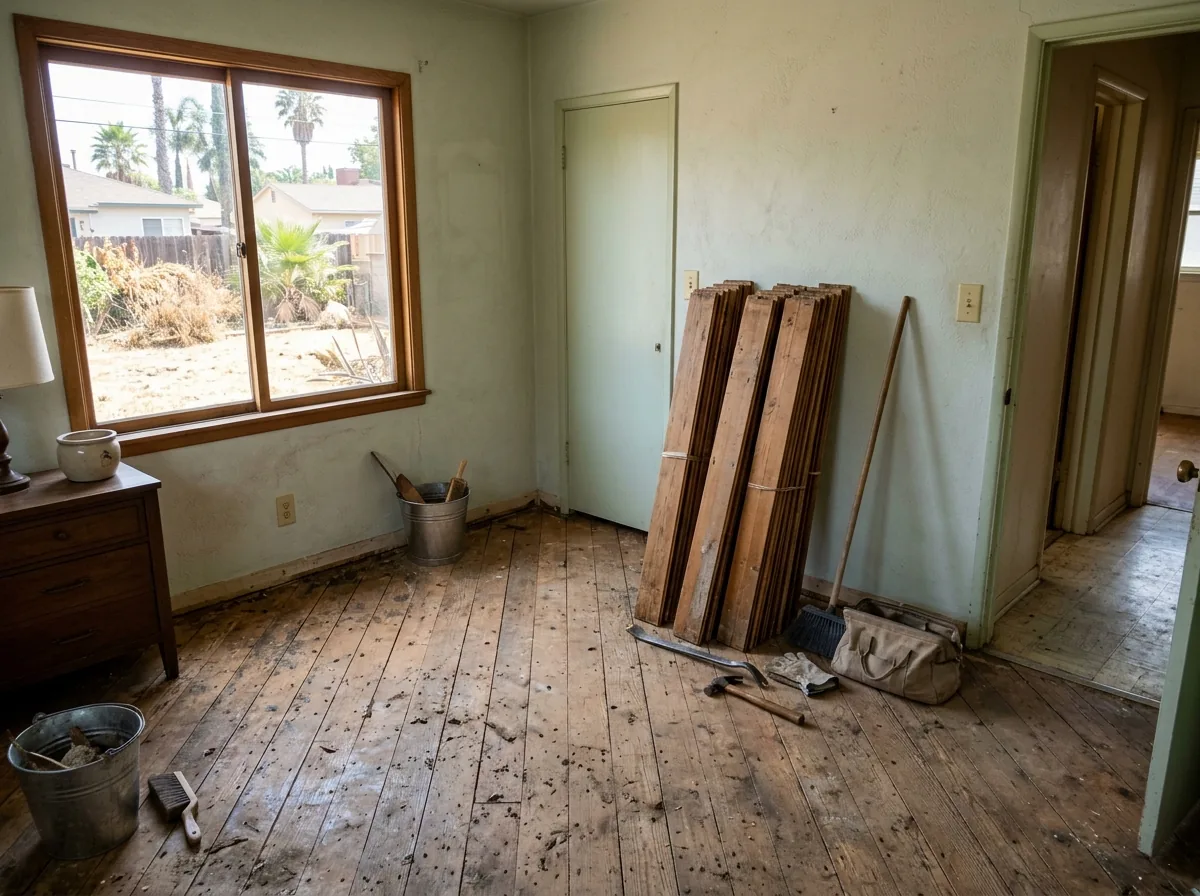
Fixr advises pulling the old floor out rather than covering it, since prepping an old floor to take new wood costs about as much as removing it. Once it's up, the installer checks the subfloor and screws down new 3/4-inch plywood where it's needed.
- Old hardwood removal: $1 to $3 a square foot (Fixr); $1.50 to $3.50 for old flooring in general (HomeGuide)
- Tear-out and haul-away: 1 to 2 days for a 300-square-foot room
- Full subfloor replacement, if it fails: $2.20 to $4.75 a square foot
Old vinyl tile or black adhesive under the floor needs testing before anyone grinds it; see Hardwood Floor Removal. Carpet tear-out has its own page, Carpet to Hardwood.
Matching New Rooms to Existing Oak
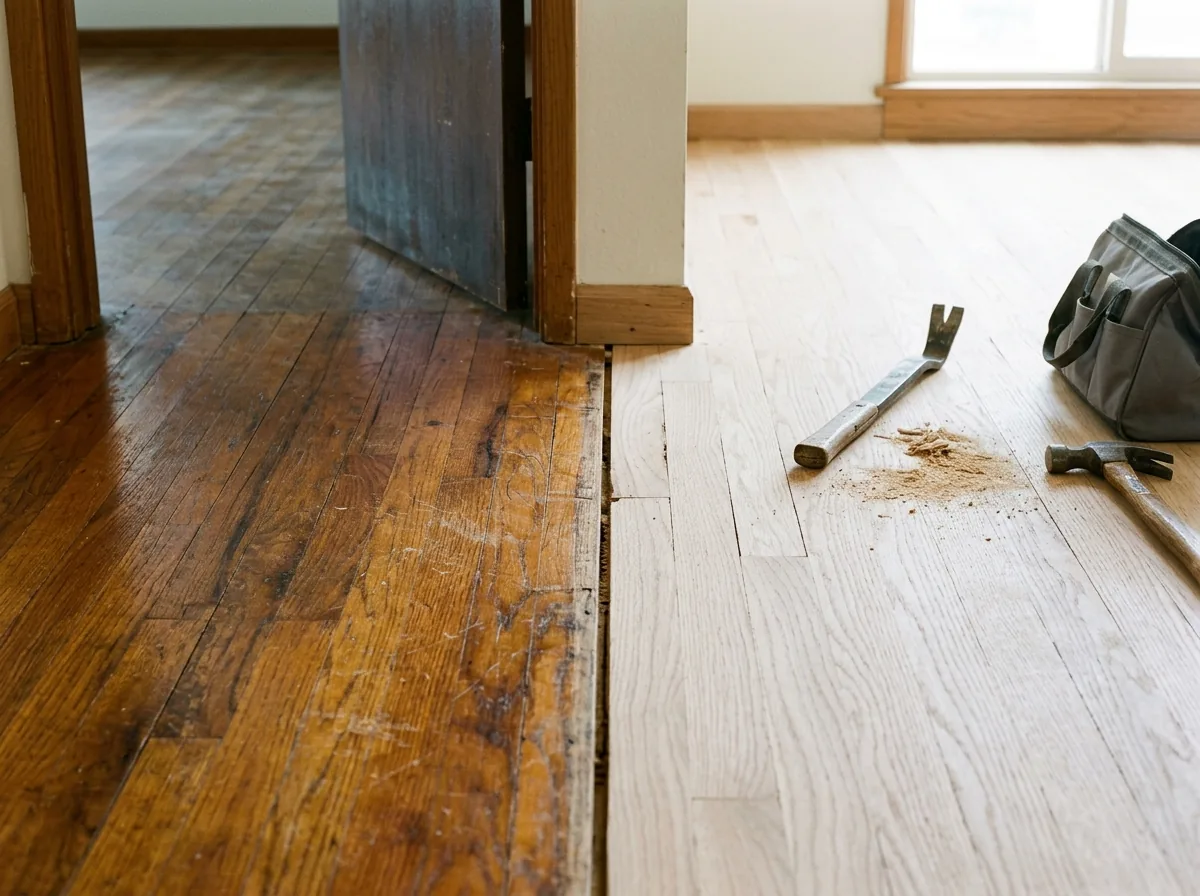
Adding a room or opening a wall usually means new oak running into old. Standard strip measures 2 to 3 inches wide, so finding matching stock is rarely the hard part. The hard part is getting the color right. Bring a loose board or a photo with a tape measure to the visit. Board-by-board weaving at the seam is covered on Hardwood Floor Repair.
Why Torrance homeowners call Torrance Wood Flooring
- Free to call or use the form; the referral costs you nothing
- Your request goes to one independent contractor, not a bidding list
- Ask for a moisture reading and a written line-item estimate
- California caps the down payment at 10% or $1,000, whichever is less
Hardwood Floor Installation Cost: Typical National Ranges
No California price table was found, so these are national guide figures, not a quote:
| Item | Typical range | Guide |
|---|---|---|
| Hardwood, all types, installed | $9 to $25 per sq ft | HomeGuide |
| Hardwood, all types, installed | $14 to $32 per sq ft | Fixr |
| Solid hardwood, installed | $11 to $25 per sq ft | HomeGuide |
| Engineered, installed | $9 to $20 per sq ft | HomeGuide |
| Materials only | $6 to $15 per sq ft | HomeGuide |
| Labor only | $3 to $10 per sq ft (HomeGuide); $3 to $6 (Fixr) | both |
| 1,000 sq ft, installed | $9,000 to $25,000 | HomeGuide |
Engineered planks have their own grades and methods on Engineered Hardwood Installation. Nail-down is the cheapest method and glue-down costs more.
Acclimation and Moisture Before the First Nail
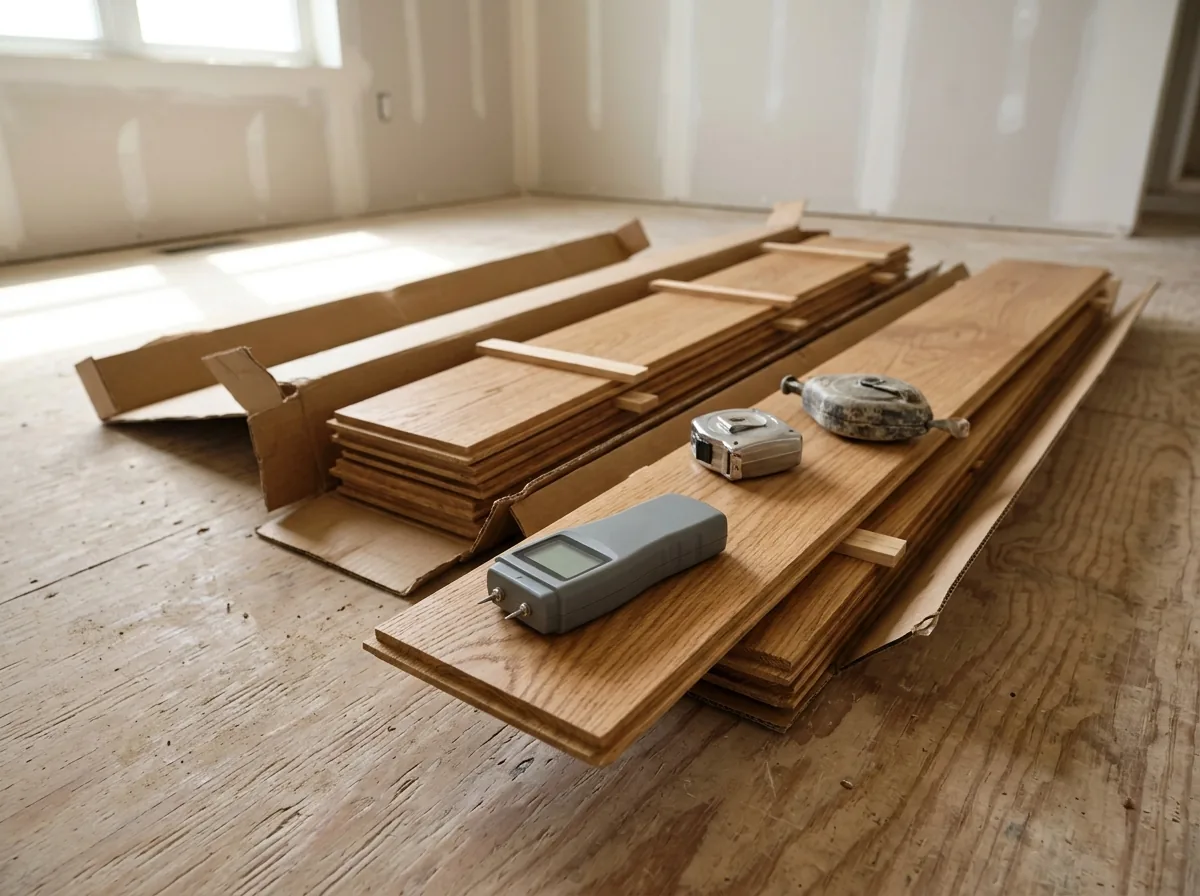
Wood shrinks and swells with the air around it, so most failed floors trace back to moisture. NWFA's checks before installation are:
- Heating or AC running at least 5 days before installation
- About 40 boards metered for every 1,000 square feet
Strip under 3 inches
Within 4 percentage points of the subfloor's moisture; boards 3 inches and wider: within 2- Plywood or plank subfloor reading 12% moisture or under
Target
6 to 9% wood moisture, which comes with 30 to 50% indoor humidity at 60 to 80 F
Most manufacturers want at least 3 days of acclimation and set no upper limit. What the coast does to those numbers is on the homepage. Ask the installer to write the readings down. If gaps or cupping show up later, those records are what anyone checking the floor will compare against.