Hardwood Floor Stain Colors and Techniques
Stain sits in the wood, under the clear finish. That's why it needs bare wood: one oil-modified stain's data sheet says to apply it only over bare wood, after a final cut with 80 to 100 grit. The four approaches below cover most color changes on Torrance oak floors.
Dark Stains With Water-Popping
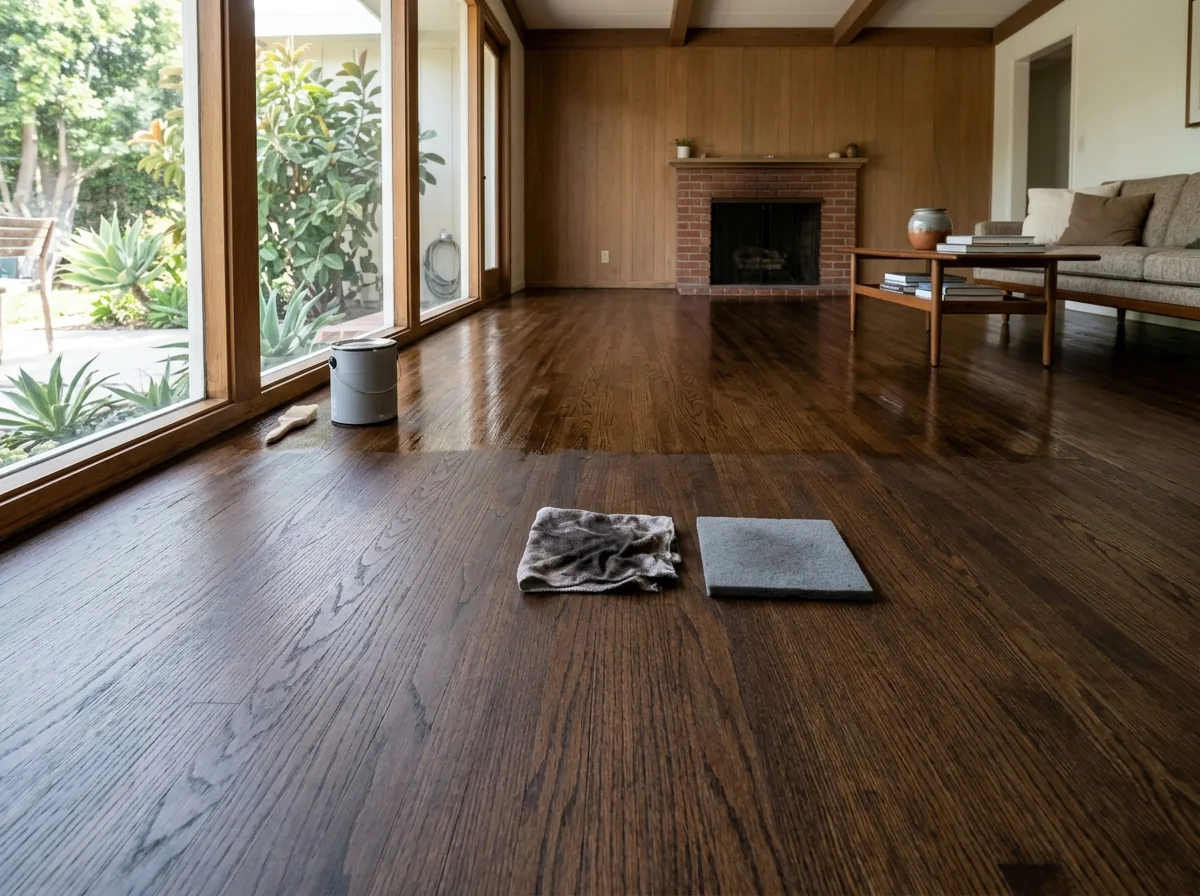
Going darker usually means water-popping: the finisher wets the freshly sanded floor so the grain opens, lets it dry, then stains. Wagner Meters says the wood then takes more stain and looks darker and richer. It has risks:
- Uneven water leaves blotches, and the usual fix is sanding again
- The wood must dry back first, usually a few hours
- The darkest colors dry slowest: one data sheet lists 2 hours for most wood tones and 12 to 18 hours for its ebony and deep browns
Dark floors show dust and pet hair more. That's a fair trade for some households and a daily annoyance for others.
Natural and Light Oak Tones
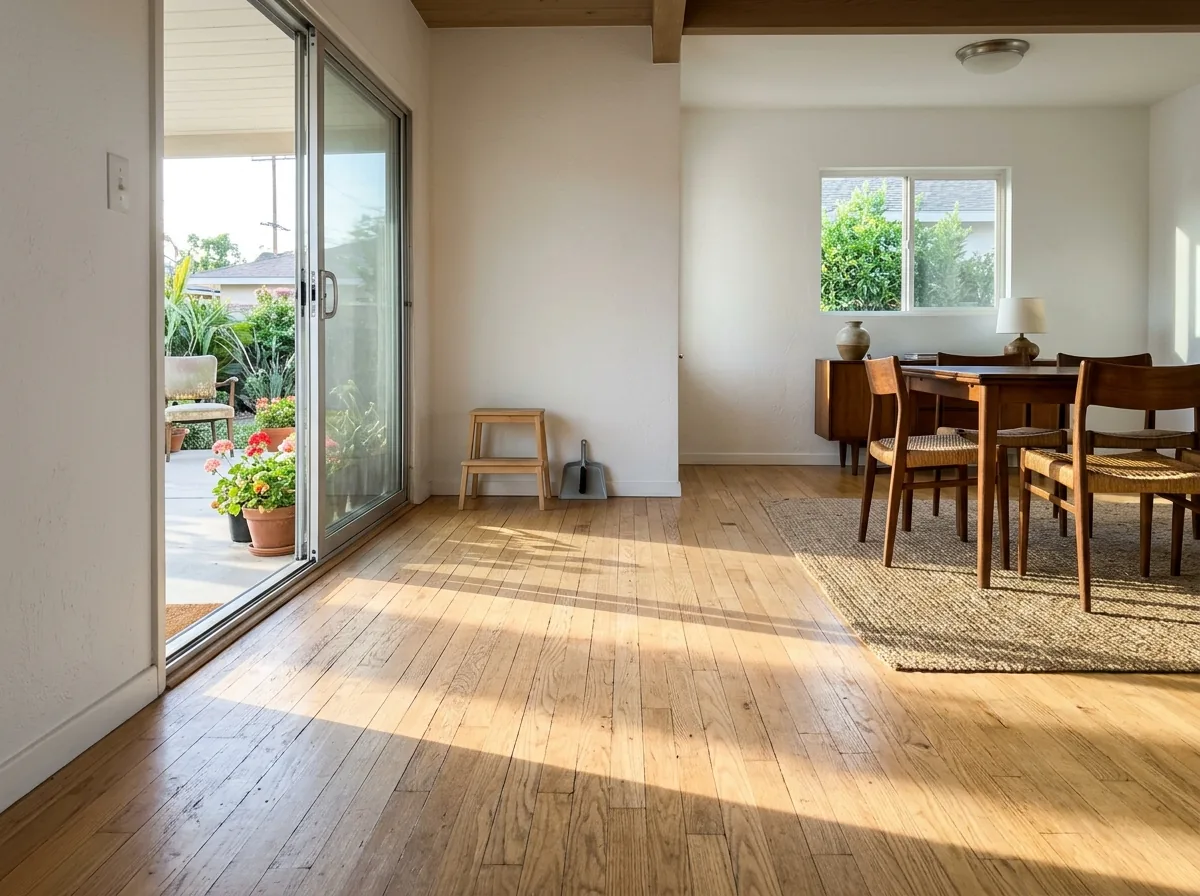
A "natural" floor often has no stain at all, just the clear finish on sanded oak. The finish then sets the color. Fixr notes that oil-based polyurethane turns amber over time, so a pale floor coated with it warms up over the years. Waterborne finishes come in very low sheens; one ultra-matte sheet lists 4 to 6% gloss. Finish choices are compared on Hardwood Floor Finishes.
Gray and Cool-Toned Floors
Gray and whitewash looks mean pigment on bare wood, and pale pigments are slow: one stain line's white needs at least 6 hours to dry. The same line sells gray, pewter and driftwood shades and says all its colors can be blended, so a finisher can mix a custom tone. HomeGuide prices whitewashing at $3 to $8 per sq ft because it takes sanding and staining both. A practical point: gray floors tend to date faster than brown ones. If you plan to sell within a few years, pick the shade that suits the house, not this year's trend.
Test Patches on Your Own Boards
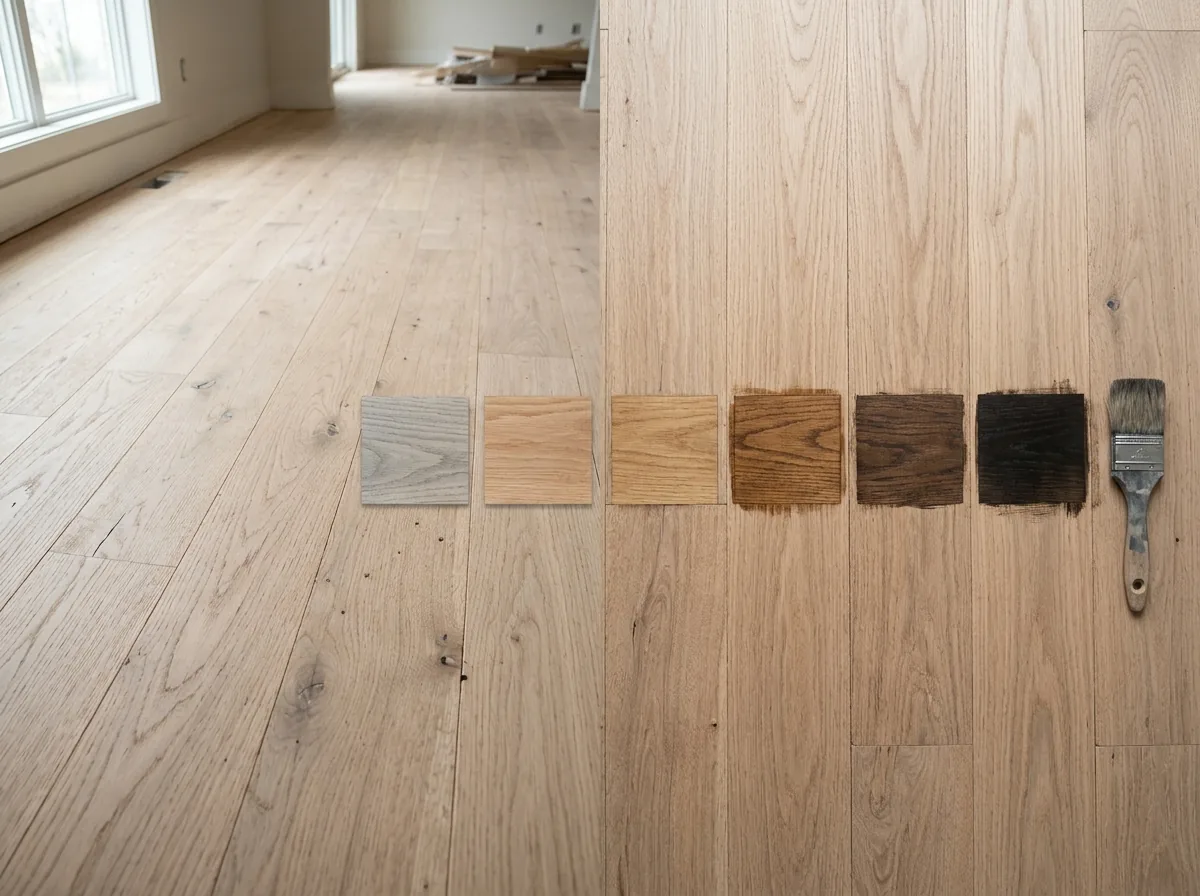
A sample board in a store can't tell you what your own oak will do. Stain makers say to always prepare a sample or test area, and Wagner advises seeing the color on water-popped wood if the floor will be popped. Ask for patches:
- On the floor itself, after the final sanding grit
- With the same water-popping step the job will get
- Under a strip of the actual topcoat, since the finish shifts the color
- Viewed in daylight and lamplight both
Why Torrance homeowners call Torrance Wood Flooring
- Free to call or use the form; the referral costs you nothing
- Your request goes to one independent contractor, not a bidding list
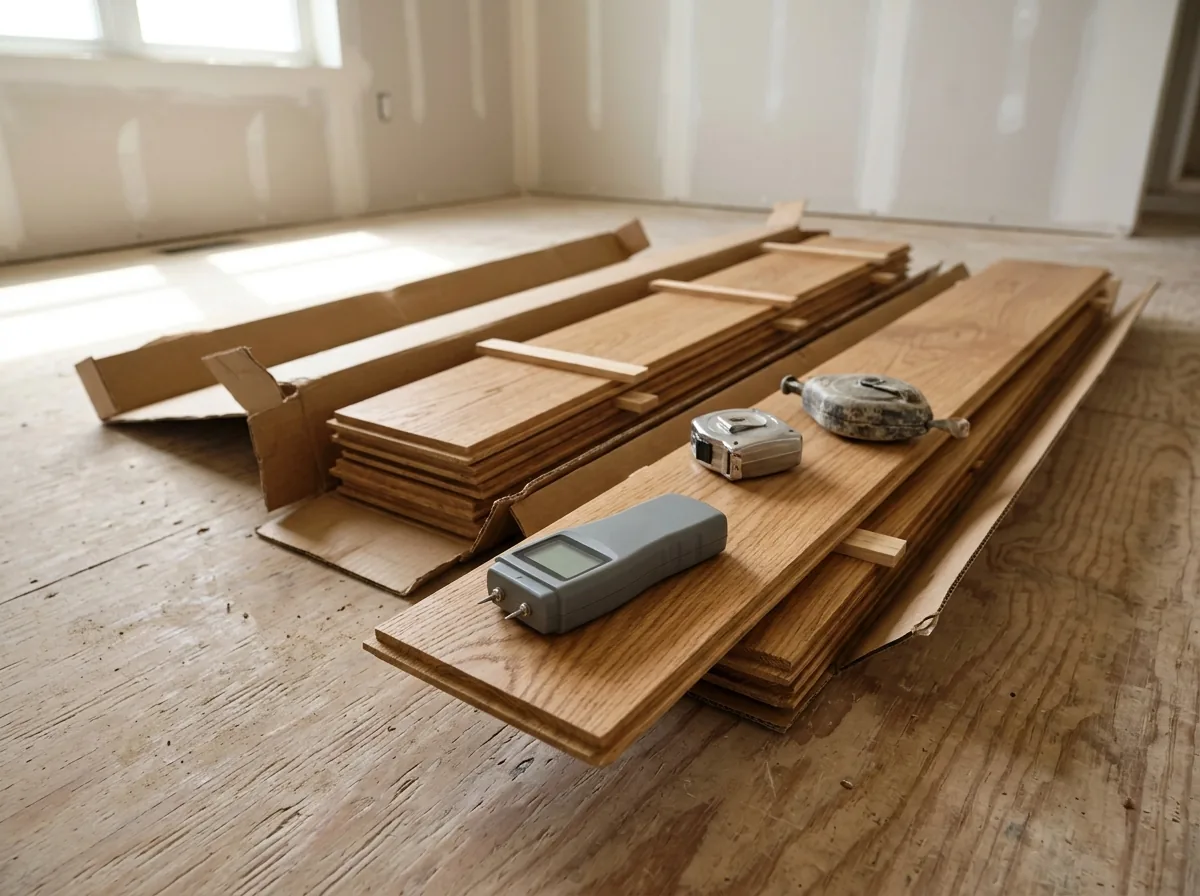
- Ask for a moisture reading and a written line-item estimate
- California caps the down payment at 10% or $1,000, whichever is less
Stain Costs and Drying Time
Staining is priced on top of the sand and finish.
| Item | National guide range |
|---|---|
| Stain added to a refinish | $1 to $3 per sq ft (Fixr) |
| Staining as an add-on | $0.50 to $2 per sq ft (HomeGuide) |
| Sand, stain and refinish, all in | $3 to $8 per sq ft (HomeGuide) |
| 12 x 12 room, with stain | $430 to $1,200 (HomeGuide) |
| Whitewash | $3 to $8 per sq ft |
On timing, Fixr says the stain needs about a day to dry before the finish goes on. One data sheet allows its stain to dry for as little as 2 hours, then wants the topcoat within 48 hours. The same sheet says high humidity and low temperatures stretch dry times, and Fixr says humid climates slow drying too. On damp, foggy coastal days, give the stain the long end of its window. The full refinish range is on Hardwood Floor Refinishing.
Stain VOC Limits in Torrance
South Coast AQMD, the air district for large areas of Los Angeles County, where Torrance sits, caps interior stains at 250 g/L of VOC under Rule 1113. Some stains sold nationally are well over that; one oil-modified stain's data sheet lists 550 g/L. Ask which stain the finisher plans to use and whether it's sold as compliant for this district. VOC limits for clear finishes are covered on Hardwood Floor Finishes.