Hardwood Stairs Projects, Step Types and Fixes
Stairs are priced per step, not per square foot, because each step is cut, fitted and fastened on its own and has to stay within code limits.
Carpeted Stairs Converted to Wood Treads
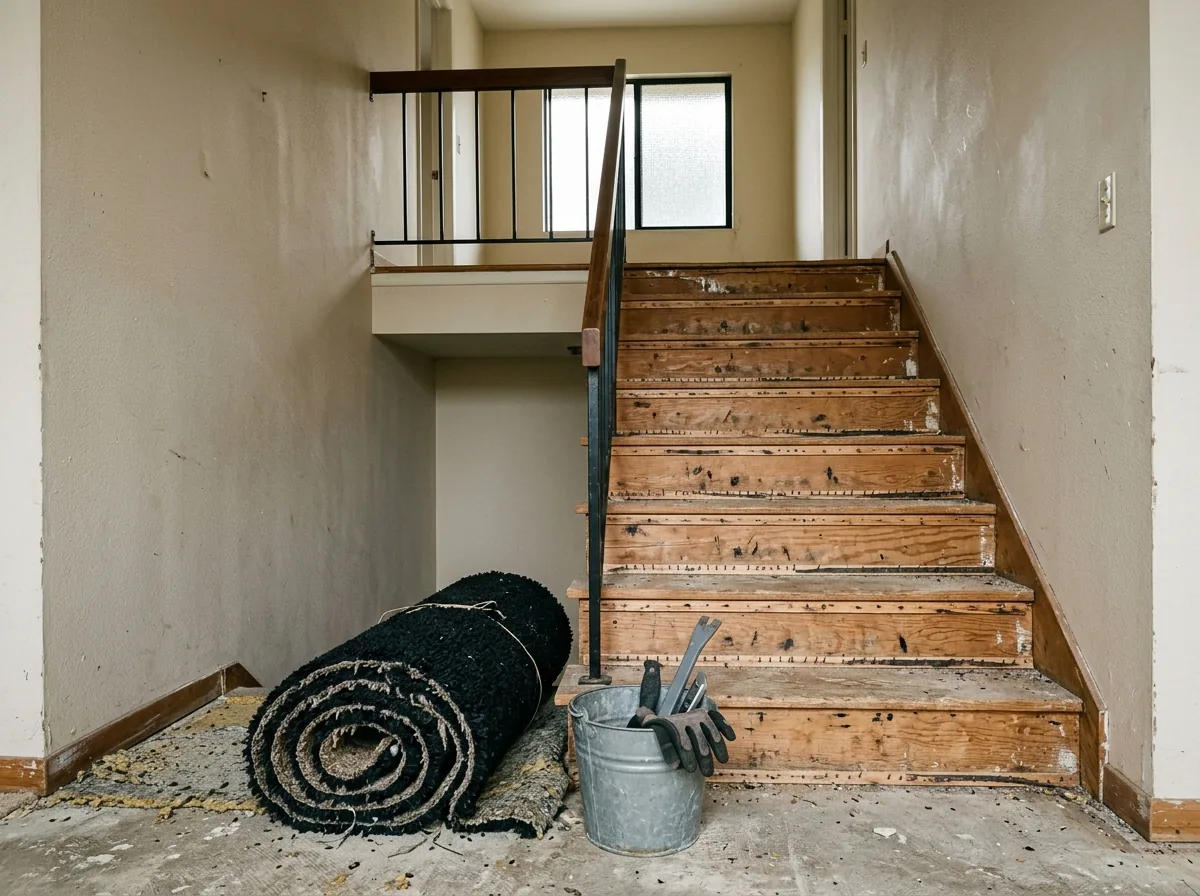
This is the most common stair job. The carpet, pad, tack strip and staples come off, and what's underneath decides what's next. HomeGuide prices carpet removal at $100 to $400 for a staircase and repairs to the steps (squeaks, water damage) at $200 to $600. Plan on new treads or caps. Sanding what was under the carpet only works if it turns out to be finish-grade hardwood.
Full Tread and Riser Replacement
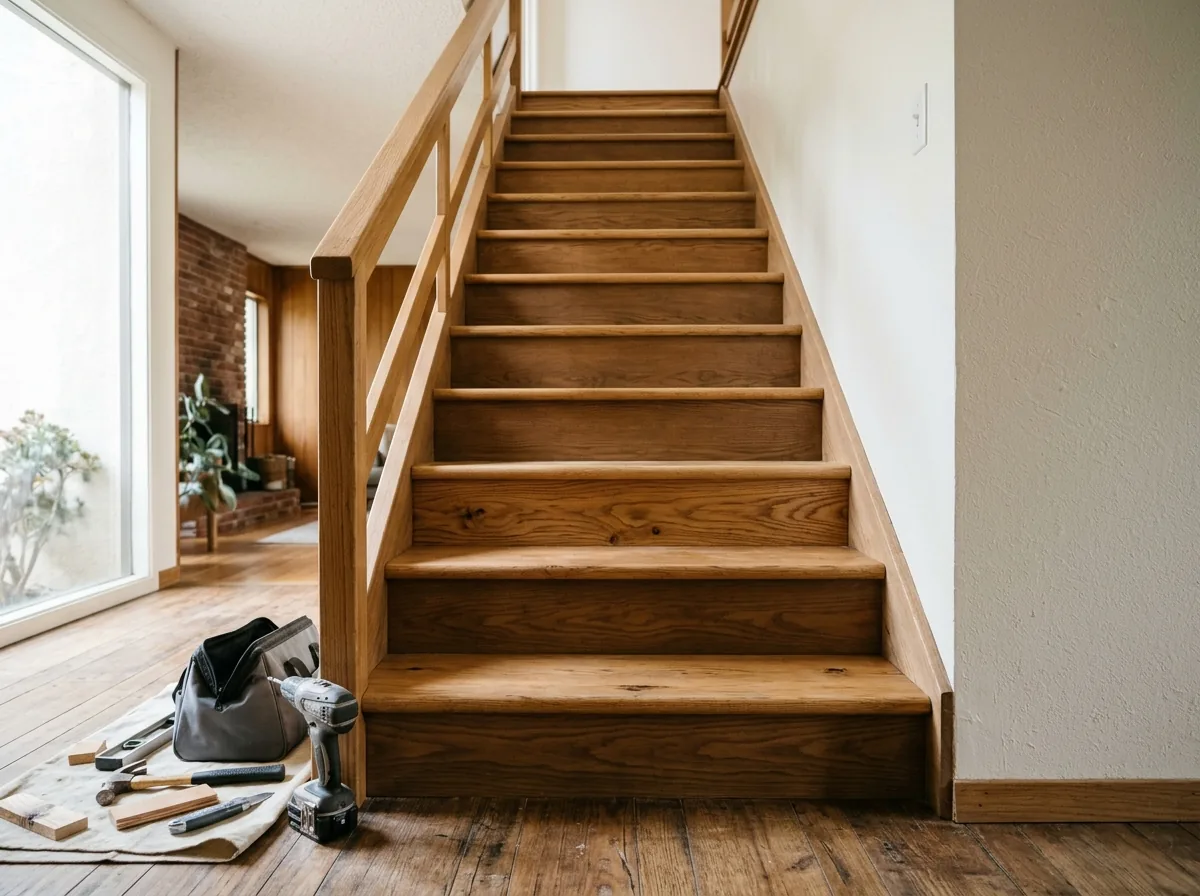
Old treads and risers come off and new ones go on. In HomeGuide's description, the installer measures and cuts each tread and riser, secures the risers, glues the treads, checks level and nails them down. NWFA's stock sizes:
- Risers: 3/4 inch thick
- Treads: 3/4 to 1-1/16 inch thick
Solid treads can be sanded again and again, which matters on the most-used wood in the house. Fixr says to avoid softwoods on stairs.
Cap Treads Over Existing Steps
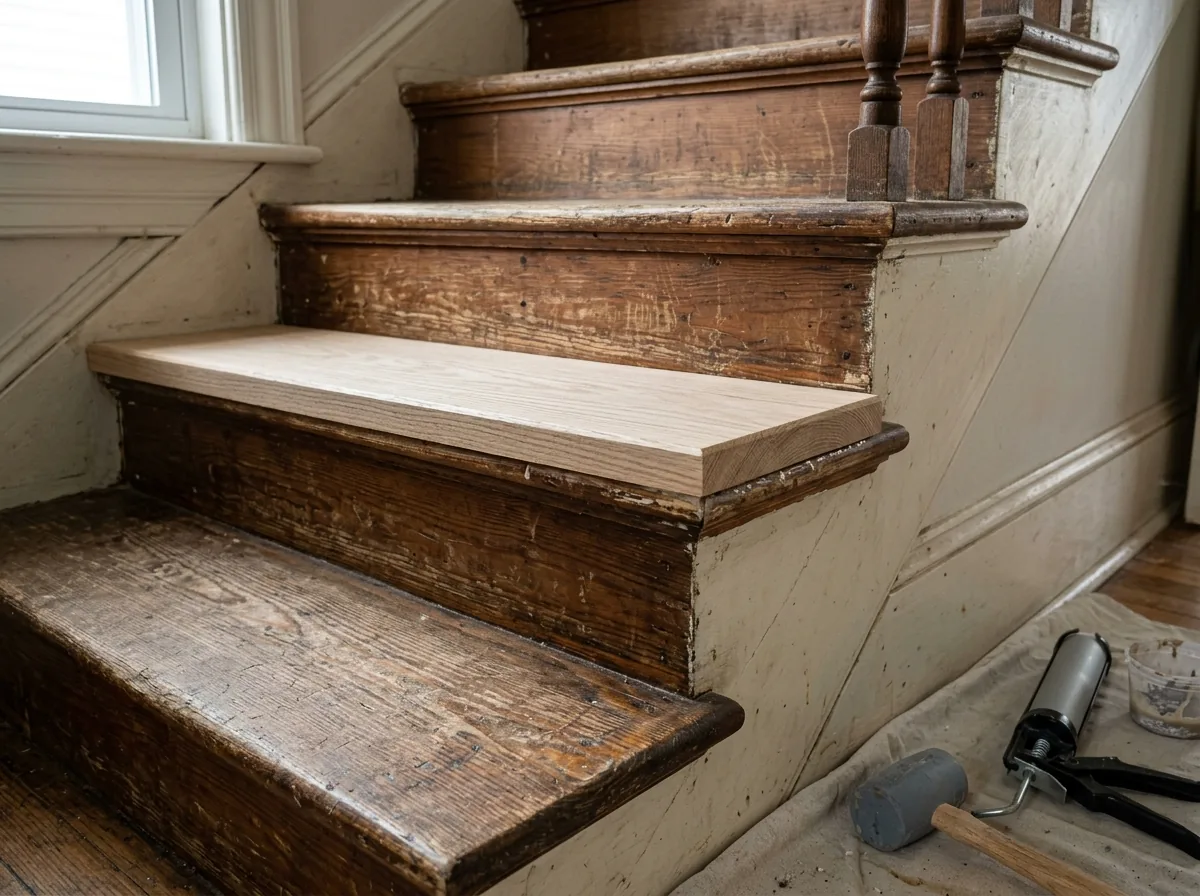
A cap, or retread, is a thinner tread glued over the old one. It saves tear-out. The catch is arithmetic: every cap adds the same thickness to every step, so the middle risers stay equal while the bottom riser grows and the top one shrinks by that amount. With California's 3/8 inch limit on variation, a thick cap over a flight that was already near the limit won't pass. Ask the carpenter to measure the first and last riser before quoting caps.
Stair Nosing Where the Stairs Meet the Landing
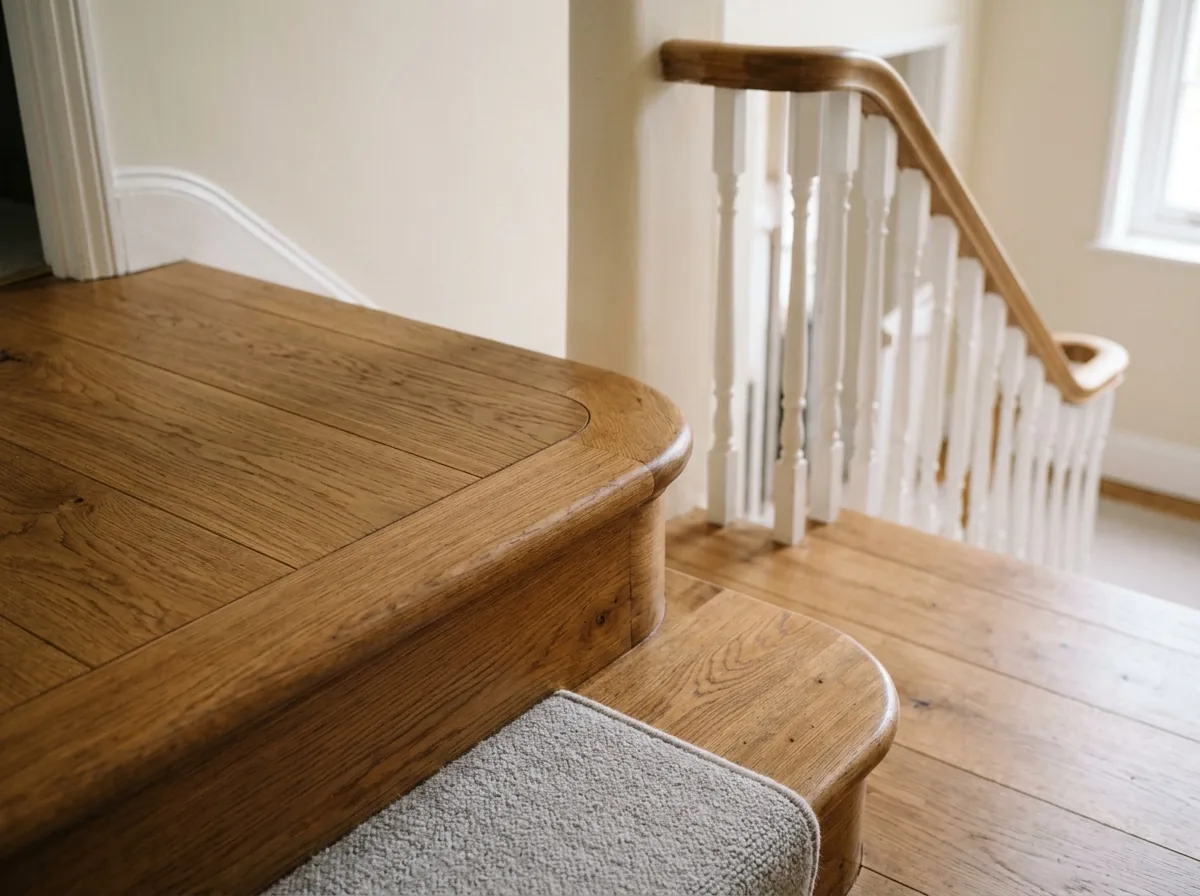
The nosing is the rounded front edge of each tread. NWFA also uses the term for the landing tread or bull nose that finishes the top step and the edge of a stairwell. It's where stairs and floor meet, so it's where a mismatch shows. California's numbers:
- Nosing projection: 3/4 to 1-1/4 inches (not required when treads are 11 inches or deeper)
- Edge: radius no more than 9/16 inch, or a bevel no more than 1/2 inch
- Projection can't vary more than 3/8 inch through the flight
Wood handrails run $20 to $60 a linear foot and balusters $5 to $20+ each in HomeGuide's guide. Ask early whether railings are part of the stair carpenter's scope or a separate trade.
Why Torrance homeowners call Torrance Wood Flooring
- Free to call or use the form; the referral costs you nothing
- Your request goes to one independent contractor, not a bidding list
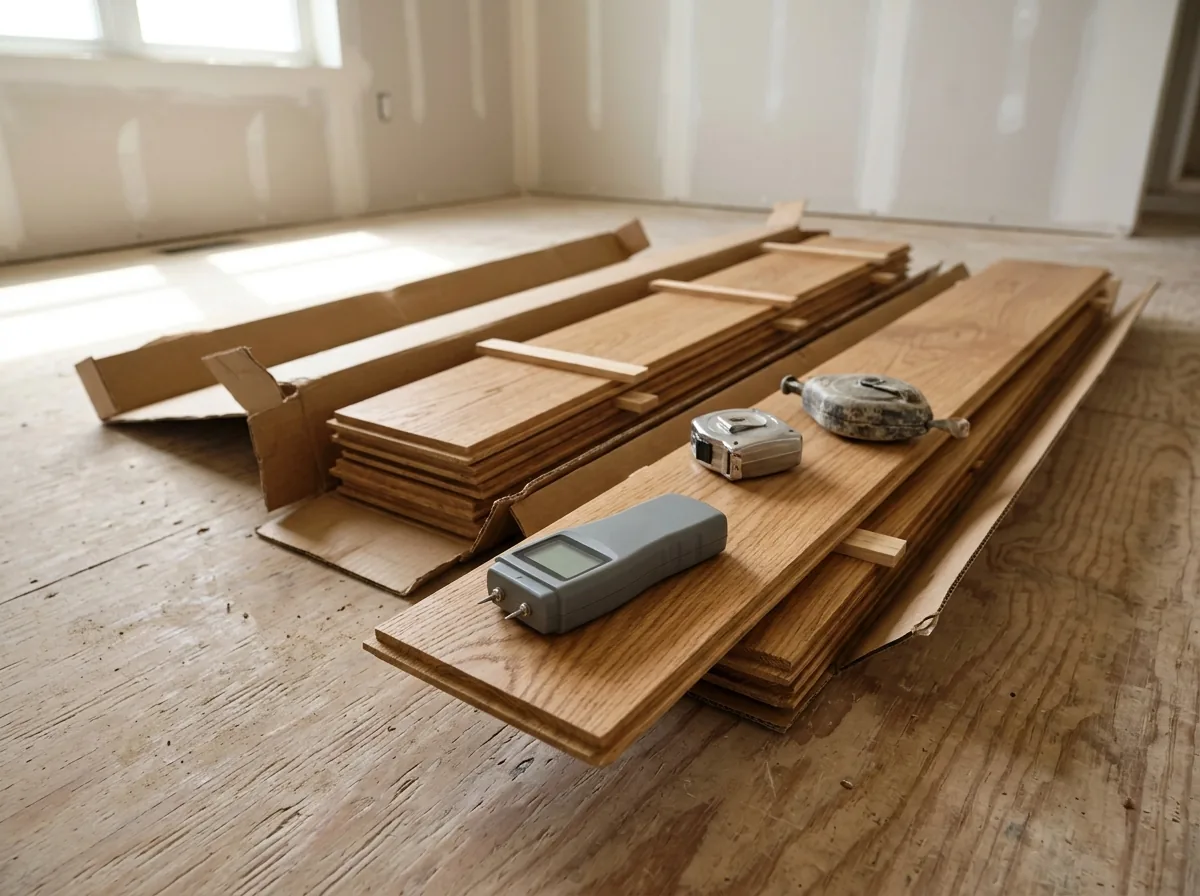
- Ask for a moisture reading and a written line-item estimate
- California caps the down payment at 10% or $1,000, whichever is less
Hardwood Stair Cost per Step
| Wood | Solid, per step | Engineered, per step |
|---|---|---|
| Oak | $120 to $180 | $100 to $150 |
| Hickory | $130 to $220 | $110 to $160 |
| Maple | $140 to $240 | $120 to $170 |
HomeGuide's figures include materials and labor. HomeAdvisor's guide gives $100 to $300 a step, an average job of $2,400, and says most homes have 10 to 20 steps. For a full staircase, HomeGuide's 12 to 16 steps come to $1,800 to $6,300. Prefinished treads cost more up front but skip on-site sanding and coats. Unfinished treads add refinishing at $2 to $8 a square foot. Refinishing stairs that are already wood is priced separately on Hardwood Stair Refinishing.
California Stair Limits to Check Before New Treads
The California Residential Code (R311.7.5) sets the geometry, summarized here from a California city's building handout:
Riser height
7-3/4 inches maximumTread depth
10 inches minimumLargest and smallest riser in a flight
No more than 3/8 inch apart; the same for treads
New treads and caps change those dimensions by their thickness. Ask the contractor whether your job needs a permit. Don't assume it doesn't.